REVIEW · PALM EAGLE BEACH
Aruba Countryside Tour
Book on Viator →Operated by AGW TOURS ARUBA · Bookable on Viator
Aruba looks different off the beach. On this 4-hour countryside tour, you get a guided run across nearly 70% of the island, with photo stops and onboard stories that make the scenery make sense. I like that it feels efficient without feeling rushed, especially when your driver lines up quick moments at the big Aruba hits like California Lighthouse (Faro) and Alto Vista Chapel.
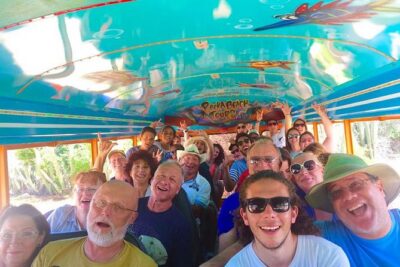
I also like the small-group feel. With a cap of about 16 people and guides such as John and Dolfi, the commentary stays easy to follow, and the stops feel more human than cattle-car sightseeing. Most departures include bottled water and snack-style refreshments, which matters when you’re bouncing around under the sun.
One thing to think about: this is a photo-and-look tour, not a sit-down, go-slow day. The lighthouse stop can be limited if it’s under repair, and some rock steps aren’t for everyone if you’ve got mobility issues or shaky footing.
In This Review
- Key highlights worth planning around
- A four-hour Aruba road trip that actually shows the island
- Transport comfort: air-conditioning, pickup, and the small-group advantage
- Stop 1: California Lighthouse (Faro) on the northwestern limestone plateau
- Stop 2: Alto Vista Chapel for a hilltop pause on the north shore
- The Oranjestad drive-by: colorful streets, real neighborhoods
- Stop 3: Casibari Rock Formations and the photo-friendly mini hike
- Stop 4: Aruba Aloe Factory, Museum, and Store (included admission)
- Stop 5: Bushiribana Gold Mine Ruins on the northern coast
- Stop 6: The Natural Bridge area and why the island changes over time
- Stop length and pacing: how to get the most in four hours
- Value check: $49 feels fair when you count transport plus stops
- Who this tour fits best (and who should think twice)
- Should you book the Aruba Countryside Tour?
- FAQ
- Is Aruba Countryside Tour priced per person?
- How long is the tour?
- Does the tour include pickup and drop-off?
- What’s included in the price?
- Is lunch included?
- Which stops have admission fees and which are free?
- How big is the group?
- Can cruise ship passengers join, and what information is needed?
- Is free cancellation available?
Key highlights worth planning around
- Nearly 70% of Aruba in one outing: a smart way to cover coast-to-coast sights in about 4 hours
- Small group (max ~16): easier questions, less crowding at photo stops
- Guide-led culture talk: local context on what you’re seeing, from churches to mining ruins
- Aloe stop is more than shopping: museum-style learning plus a factory visit and included admission
- Real terrain at Casibari: steps/trails for views, but you’ll want steady legs
- Comfort details: air-conditioned vehicle with bottled water and refreshments
A four-hour Aruba road trip that actually shows the island
If your Aruba plans are built around beaches (understandable), this tour is the useful counterweight. It shifts you away from the sand for an air-conditioned ride that still delivers big views—coastal cliffs, hilltop landmarks, and the kind of rock-and-cactus scenery you don’t get just by driving to a resort.
The best part is the coverage. You’re not doing a single “pretty spot” loop. You’re moving through multiple regions in one day, with stops that match Aruba’s mix of nature, early industry, and everyday local life. And because the guide provides commentary throughout, you’re not just collecting photos—you’re learning why these places exist where they do.
I love that this is priced like an “easy win,” too. At $49 per person, you’re paying for transport plus a guide plus multiple major stops. That’s often where value disappears on island tours, so it’s worth saying when it doesn’t.
You can also read our reviews of more tours and experiences in Palm Eagle Beach.


Transport comfort: air-conditioning, pickup, and the small-group advantage
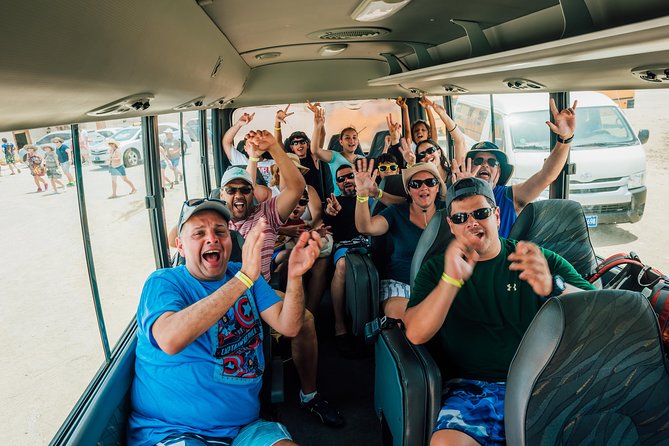
This is run on an air-conditioned bus, and the tour includes hotel/port pickup and drop-off. That alone is huge in Aruba, where the “one more stop” idea can collapse fast once you’re standing in heat.
The group size is capped around 16 travelers, which changes the vibe. Smaller groups tend to:
- make it easier to hear the guide through the commentary
- keep the photo stops from turning into a queue festival
- help the driver manage time without everyone getting left behind
You also get bottled water and snack-style refreshments. A lot of Caribbean tours quietly assume you’ll handle food whenever. Here, at least the basic fuel shows up, and it helps if you’ve already had a long morning on the beach.
Stop 1: California Lighthouse (Faro) on the northwestern limestone plateau
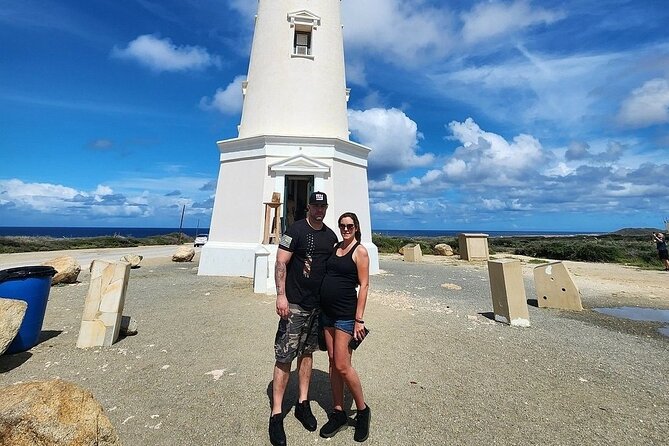
The first major photo moment is California Lighthouse, locally referred to as Faro. It sits on a limestone plateau near Hudishibana, close to Arashi Beach and the Sasariwichi dunes on Aruba’s northwestern coast.
Why I like this stop: the lighthouse area gives you that classic Aruba contrast—bright sky, dramatic coastline shapes, and rocks that look almost architectural. Even if you’re not climbing or going deep into the grounds, it’s a “stand, look, snap, repeat” kind of stop.
What to expect:
- About 15 minutes on site
- Admission is not included, so if you plan to pay for anything on top of the standard visit, check ahead
- If the lighthouse is under repair, you may not be able to do the full climb or access you hoped for, so keep your expectations flexible
Tip: if stairs or uneven ground bother you, this is where you’ll want to slow down. The area is built around a bluff, so footing matters.
Stop 2: Alto Vista Chapel for a hilltop pause on the north shore
Next up is Alto Vista Chapel, a small Catholic chapel perched above the north shore. The current chapel was completed in 1952, and it’s on the same location as the original chapel.
This stop works because it’s not just “another building.” Chapel or not, you’re getting a viewpoint moment over Aruba’s northern side, with a calmer pace than the rock stops that come later.
What to expect:
- About 10 minutes
- Free admission
- A quick photo and a short look—enough time to take it in without dragging the schedule
If you like seeing how faith, community, and landscape connect in places you visit, this one will click.
The Oranjestad drive-by: colorful streets, real neighborhoods
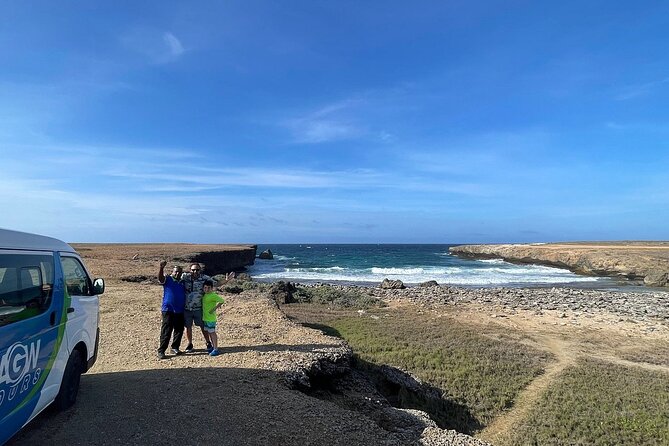
Between stops, you’ll drive through Oranjestad, Aruba’s capital. You’ll get views from the road and pass by authentic Aruban houses.
This isn’t a formal “tour the city” segment, but it’s a practical one. It helps you remember Aruba isn’t only beaches and resorts. Oranjestad gives you scale, everyday life, and that sense of place you’d otherwise miss.
Tip: if you’re serious about photos, keep your phone or camera ready. The best windows of street views don’t last long.



Stop 3: Casibari Rock Formations and the photo-friendly mini hike
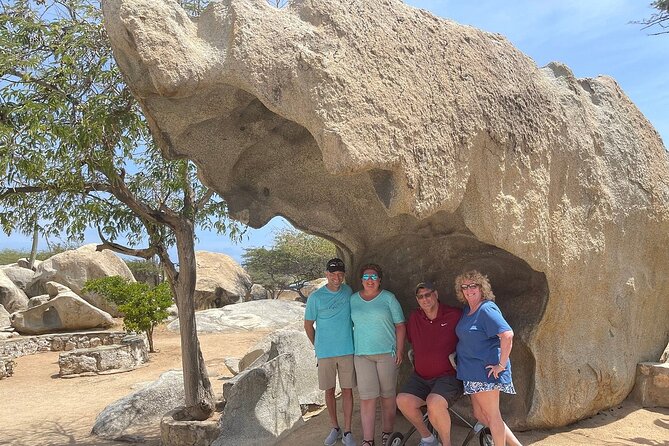
Then comes Casibari Rock Formations, an enormous cluster of tonalite rock with surrounding trails and steps leading to viewpoints.
This is one of the stops that makes the whole tour feel “real,” because you’re walking on the island’s actual terrain—not just parking near an attraction sign.
What to expect:
- About 15 minutes
- Free admission
- Steps and trails to reach the best angles
One practical consideration: if you’ve got mobility limits, knee issues, or you don’t trust uneven steps, this is not the moment to pretend. The tour’s designed as a sampling of Aruba, and this stop is more active than the lighthouse or chapel.
Stop 4: Aruba Aloe Factory, Museum, and Store (included admission)
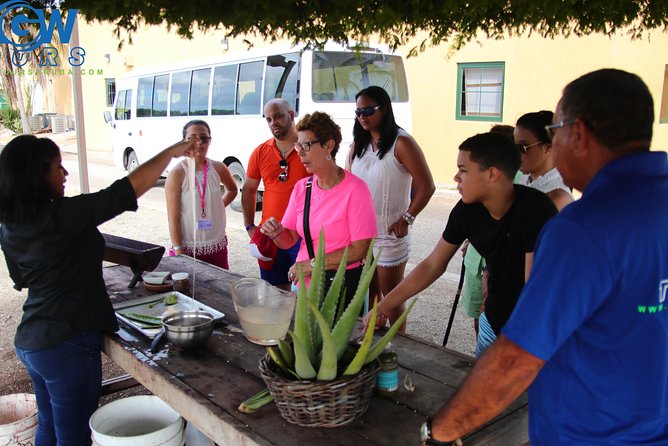
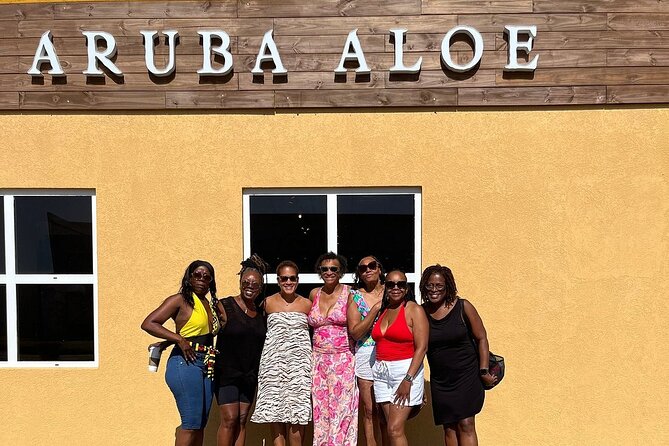
Here’s why this stop is a favorite: Aruba Aloe Factory is the oldest aloe factory in the world, and you’ll learn why the plant matters on the island. You’ll also have time in the store to see what’s made from it.
What to expect:
- About 30 minutes
- Admission included
- A fast museum-style visit and then time to browse and buy if you want
I like the aloe stop because it’s both practical and local. It’s not only a souvenir stop with a gift-shop floor. You get a little education on the plant’s uses, and that makes what you see and buy feel grounded in Aruba, not just marketed.
There is one pacing note to keep in mind: the time inside can feel quick, so if you love learning about products, plan to concentrate while you’re there. If you’re only shopping, you’ll still get enough time to browse.
Stop 5: Bushiribana Gold Mine Ruins on the northern coast
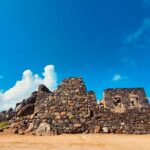
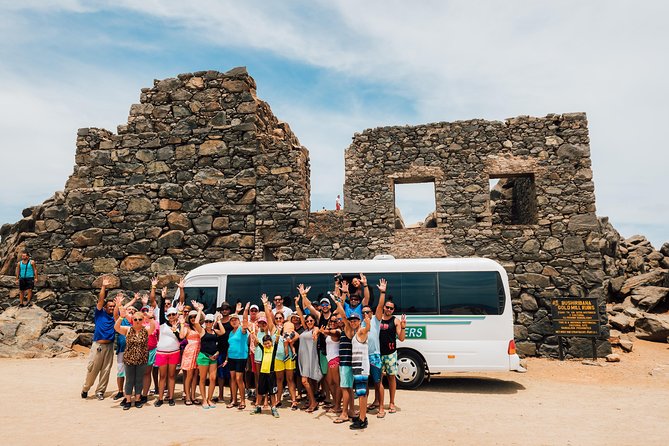
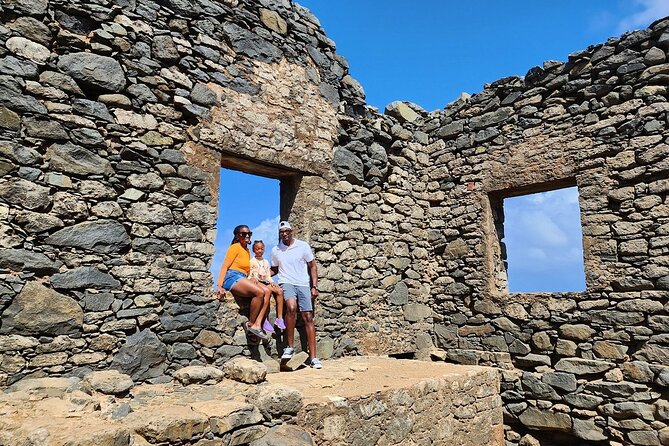
Next is Bushiribana Gold Mine Ruins, the remnants of a 19th-century gold smelting facility on Aruba’s northern coast. The stone structures were built in 1872 by the Aruba Island Gold Mining Company.
This stop gives you a different kind of Aruba story. It’s not tropical beach life. It’s history written in stone and weather, with a strong sense of how the island tried to power its economy back then.
What to expect:
- About 15 minutes
- Free admission
- A straightforward look at the ruins and the coast view around them
If you like photos with texture—rocks, old stonework, and dramatic light—this is a good one.
Stop 6: The Natural Bridge area and why the island changes over time
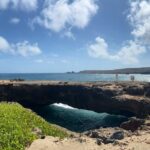
The tour also highlights Natural Bridge, which shows up as a photo stop along the route. One thing to know: Natural Bridge has had damage over time. If you’ve seen it in older photos online, what you get now may be different, and you may just be viewing the broken form and the surrounding rock shapes.
This is still worth it. It’s a reminder that Aruba’s coastline is dynamic. Nature does what it wants, even when a place becomes famous.
Quick reality check: don’t plan this stop as your only “big view” moment. The rest of the tour has plenty of scenery, so even if this angle disappoints, you’ll still come away with photos.
Stop length and pacing: how to get the most in four hours
The tour is built around short windows—roughly 10 to 30 minutes at each highlight. That structure helps you hit many areas without spending the entire day on the road.
Here’s how that pacing typically feels:
- You’ll get enough time to walk a bit and take photos
- You won’t have time for slow museum wandering or long sit-down meals
- The order matters: early views (like Faro) give you the northern coastline energy, while later stops (like aloe and ruins) shift you toward culture and history
No lunch is included, so if you’re prone to getting snacky later, bring your own extra bite before you head back. The bottled water and refreshments help, but they’re not a full meal replacement.
And yes, the road time is real. You’re covering a lot of island. If you get motion sensitive, that’s something to factor in—even in an air-conditioned vehicle.
Value check: $49 feels fair when you count transport plus stops
Let’s talk money in a way that actually helps. At $49 per person, you’re paying for:
- round-trip pickup and drop-off
- a guided experience
- air-conditioned transport
- bottled water and refreshments
- multiple major stops across the island
- included admission for the Aruba Aloe Factory
What isn’t included:
- lunch
- and some attraction admissions (like California Lighthouse)
When a tour includes transport and a guide while still hitting several top sites, it tends to beat the “buy tickets and rent a car” scenario for many first-timers, especially if you don’t want to drive yourself or you’re juggling shore times.
The only value-killer scenario is if you’re expecting lots of free time at one location. This tour spreads attention across several highlights, and the best results come from treating it like a curated highlights loop.
Who this tour fits best (and who should think twice)
This is a strong choice if:
- you want an off-beach day that still feels easy
- you’re in Aruba for a short stay and want to see more than one corner
- you like guided context—history, culture, and the “why” behind sights
- you prefer a smaller group rather than a giant bus crowd
Think twice if:
- you have trouble with steps or uneven terrain (Casibari is the main question mark)
- you need long visits inside attractions
- you’re only interested in beach time and don’t want a road-focused schedule
Also, if you’re a cruise passenger, know that pickup timing and meeting points matter. The tour runs with cruise coordination, and it can be worth arriving early and verifying exactly where you’ll meet the group.
Should you book the Aruba Countryside Tour?
I’d book it if you want a quick, well-organized way to see Aruba beyond the shoreline. The small group size, the air-conditioned comfort, and the selection of stops—from Faro and Alto Vista to aloe and the gold-mine ruins—make it a solid “first bearings” day.
Skip it (or choose something else) if you want a long, slow nature hike day, or if your mobility needs mean stairs and rocky steps will be a problem. In that case, you’ll likely find the active moments frustrating rather than fun.
If you’re on the fence, here’s my practical advice: treat this as a highlights sampler. Bring a little flexibility for stop access (like the lighthouse if it’s under repair), and you’ll get a very efficient, story-rich taste of the island.
FAQ
Is Aruba Countryside Tour priced per person?
Yes. The price is listed as $49.00 per person.
How long is the tour?
The duration is about 4 hours (approx.).
Does the tour include pickup and drop-off?
Yes. Hotel/port pickup and drop-off are included.
What’s included in the price?
The tour includes a local guide, bottled water, an air-conditioned vehicle, and hotel/port pickup and drop-off. Snacks and refreshments are also part of the experience description.
Is lunch included?
No. Lunch is not included.
Which stops have admission fees and which are free?
California Lighthouse has admission not included. Alto Vista Chapel is free. Casibari Rock Formations is free. The Aruba Aloe Factory has admission included. Bushiribana Ruins is free.
How big is the group?
This tour has a maximum of 16 travelers.
Can cruise ship passengers join, and what information is needed?
Yes. Cruise ship passengers must provide the ship name, docking time, disembarkation time, and re-boarding time at booking.
Is free cancellation available?
Yes. You can cancel up to 24 hours in advance for a full refund. Cancellation within 24 hours is not refunded.