REVIEW · ARUBA
Aruba 2-Seater UTV Tour Adventure with Kini Kini
Book on Viator →Operated by Kini Kini Transfer & Tours · Bookable on Viator
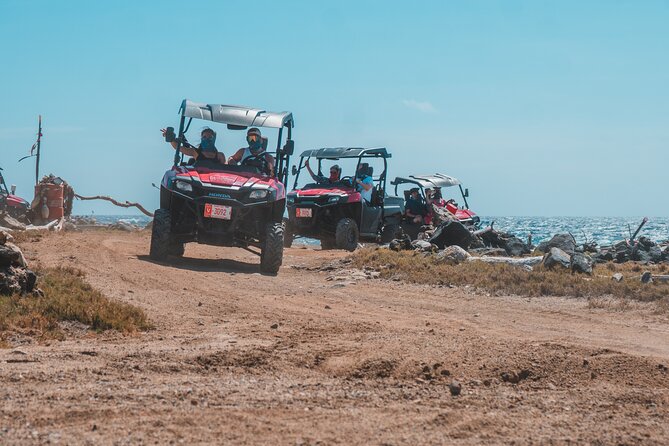
UTVs in Aruba feel like off-road freedom. I love the small-group setup (max 10) and the way the ride strings together north coast stops with real off-road time. One thing to factor in: the route is bumpy, so plan for some physical effort.
You start from Kini Kini Transfer & Tours in Oranjestad and spend about four hours bouncing between hilltop views, beaches, and rock formations. The stops are short on purpose, built around history and scenery, including Alto Vista Chapel on the 1750 church site and Wariruri Beach (Baby Natural Bridge). Guides like Gabriel and Myron are repeatedly praised for keeping the day fun while staying focused on safety and control.
In This Review
- Key points before you go
- UTV tour value in Aruba: what makes it worth $100
- Your 2-seater UTV: driving rules and what to expect
- The four stops that structure your Aruba off-road day
- Stop 1: Alto Vista Chapel on the hilltop 1750 church site
- Stop 2: Wariruri Beach, also called Baby Natural Bridge
- Stop 3: Bushiribana Ruins and the 19th-century Gold Rush goldmill
- Stop 4: Casibari Rock Formations and Indian cave painting history
- How the guide style shapes the whole tour
- What to wear and pack for the bumpy, dusty reality
- Who this tour suits best (and who should consider another day)
- Should you book Kini Kini’s Aruba 2-seater UTV tour?
- FAQ
- How long is the Kini Kini Aruba UTV tour?
- Do you get pickup and drop-off?
- Can everyone drive the UTV?
- Are the stop admissions included?
- What should I wear or bring for the tour?
- What’s the cancellation window?
Key points before you go
- Max 10 people means more time with your guide, less waiting around, and a tighter feel for the day
- 2-seater UTV with clear driving rules: drivers must be 18+ with a valid license; under-18s can ride only
- Four major stops are time-boxed with free admission for the listed sites: chapel, Wariruri Beach, Bushiribana ruins, and Casibari rock formations
- Guides can make or break the vibe: many reviews highlight high energy and help with driving, photos, and safety
- Dust and sun control matter: goggles are not included, and you’ll want protection for your face and eyes
- Pickup and drop-off from most hotels and the cruise port is included, so you’re not stuck figuring out transport
UTV tour value in Aruba: what makes it worth $100
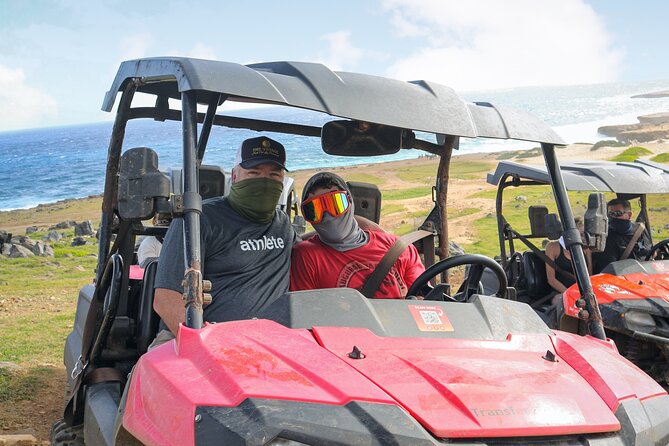
For $100 per person, you’re paying for three things at once: a guided off-road experience, transportation (pickup and drop-off from most hotels/cruise port), and a packed half-day route that hits multiple Aruba highlights in a single outing.
The “included” part is more than a checkbox. You get bottled water, safety equipment, and a safety overview, which matters on a vehicle ride that mixes smooth sections with tougher terrain. And the stops are short, so you’re not spending your whole day parked. Each of the four listed stops is about 20 minutes, with admission ticket free for those locations.
The biggest value signal here is the small-group cap of 10 travelers. With a bigger group, UTV tours can feel like a long line. With a smaller group, the day stays active, and your guide can actually manage pacing and safety.
You can also read our reviews of more tours and experiences in Aruba.

Your 2-seater UTV: driving rules and what to expect
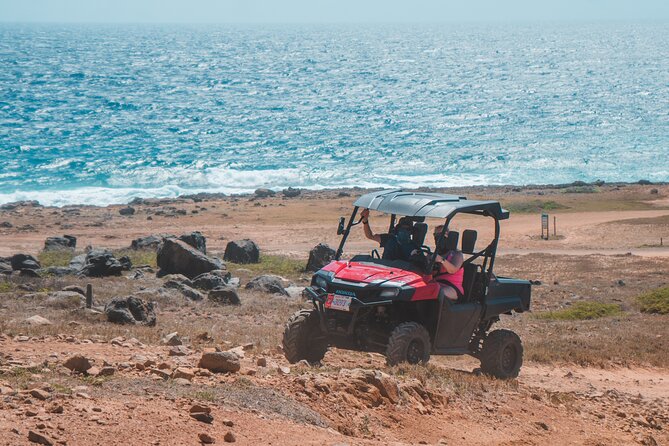
This is a 2-seater UTV tour, and Aruba law is very specific about who can drive. By law, the driver must be at least 18 and have a valid driver’s license. If you’re under 18, you can ride as a passenger, but you cannot drive.
That affects how you should plan your group:
- If you’re coming as a couple or friends, decide ahead of time who is driving.
- If you’re traveling with kids or teens, you’ll want to pair riders so everyone who can drive gets a turn.
- If no one in your party meets the 18+ requirement, you’ll still be able to participate as a passenger, but you’ll miss the full driving experience.
Safety-wise, you’ll get a safety overview and safety equipment. In the reviews, guides are repeatedly described as attentive and careful with guests, including helping people manage uneven ground and keeping you safe through busier road moments.
One extra nuance from review chatter: some people mention that UTV helmets may be optional, while other vehicle types (ATVs) can require helmets. This isn’t spelled out in the basic info here, so if helmet comfort is a priority, ask the team when you arrive. If you prefer a predictable setup, that simple question can save your day.
The four stops that structure your Aruba off-road day
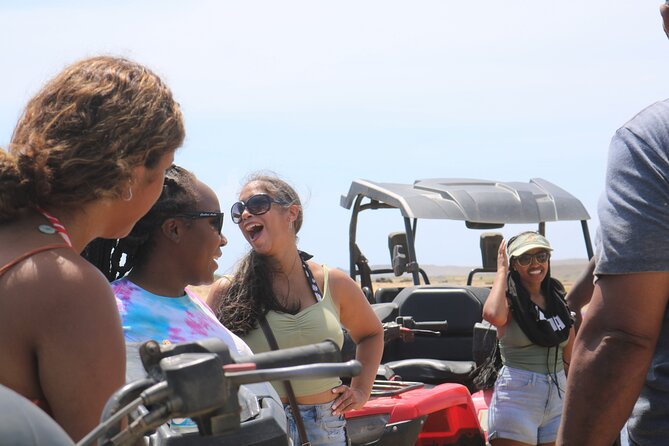
The tour is about 4 hours total, and it moves on purpose: short visits, lots of driving, and photo-friendly pacing. Think of the day as a “north coast sampler” that also sends you out into Aruba’s rougher terrain.
Stop 1: Alto Vista Chapel on the hilltop 1750 church site
You’ll visit Alto Vista Chapel, built on a hilltop location tied to the island’s first Catholic church constructed in 1750. Even with only about 20 minutes here, it’s a strong starting point because it gives you a high-view moment early in the tour.
Why this stop works: you get perspective. Hilltop spots help you understand where you are, how the coast curves, and why people still treat this area as an essential Aruba photo stop.
What to watch for: since it’s hilltop and you’ll be moving on and off vehicles, wear shoes with grip. If your footwear is too soft or slippery, you’ll feel it on the transfer between surfaces.
Stop 2: Wariruri Beach, also called Baby Natural Bridge
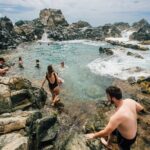
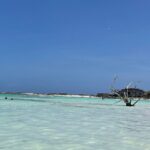
Wariruri Beach is also known as Baby Natural Bridge, and you’ll spend around 20 minutes here. This is part of the tour’s promise of a break by the water, and it’s often where the day shifts from pure driving to sand-and-swim time.
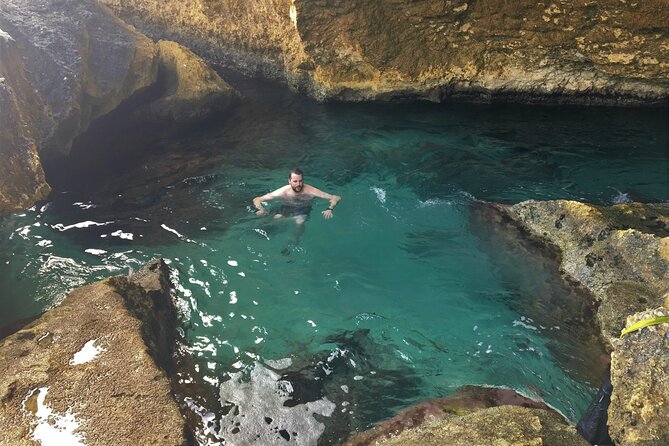
In review notes, people talk about getting in the water and even enjoying natural pool-style spots nearby when conditions allow. The tour can be weather-sensitive, so if you’re hoping for a specific jump or swim moment, come with Plan B energy.
Practical tip: this is where you’ll appreciate having shoes you can walk in and (if you have them) water shoes. Reviews also strongly suggest having sun and face protection because Aruba sun plus dust can add up fast.




Stop 3: Bushiribana Ruins and the 19th-century Gold Rush goldmill
Next up are the Bushiribana Ruins. During Aruba’s 19th-century Gold Rush, an English mining company built a goldmill here along the north coast. The ruins are tangible evidence that this part of Aruba’s story wasn’t always about tourism and beaches.
This stop is valuable even if you don’t care about mining history. It gives you texture. Aruba’s coast has that “rock-meets-time” feel, and these structures help you see the island as something humans built, worked, and struggled with long before visitors arrived in bigger numbers.
Time is short here, too, so keep an eye on your camera battery and hydration. You’ll spend the rest of the day in bright light, and it’s easy to underestimate how quickly you get drained out there.
Stop 4: Casibari Rock Formations and Indian cave painting history
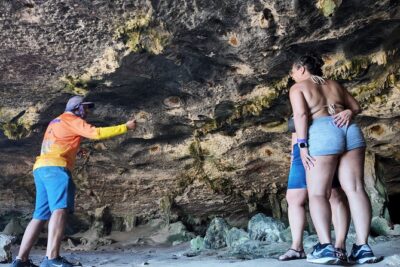
Casibari Rock Formations are grouped close together, and your guide will also point you toward the area’s connection to Indian cave paintings. You’ll have about 20 minutes at this stop.
What makes Casibari special is that it’s not just one view. It’s several rock shapes that feel sculpted by time and erosion, with enough variety that even a quick stop can produce multiple photos.
The caution: the terrain around rock formations can be uneven. Reviews mention scrambling and climbing assistance, so take your time, listen to your guide’s instructions, and don’t rush because the vehicle is waiting.
How the guide style shapes the whole tour
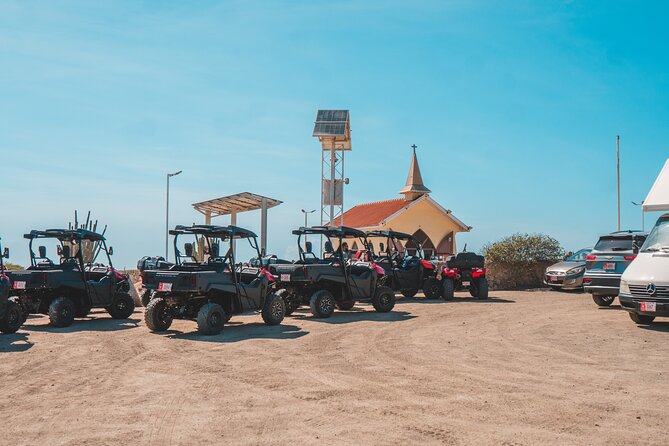
This is one of those tours where your guide can turn it from a drive into a story you actually remember. Across the reviews, names that come up again and again include Gabriel, Myron, Nahym, Poncho, Rasta, and Poco. The common threads: high energy, lots of island facts, and hands-on safety attention.
Here are the guide behaviors I’d expect you to benefit from most:
- Clear direction for driving and passing through tricky road sections
- Encouraging pacing so you don’t feel rushed through the stops
- Help with photos, including stepping in at the right moments
- Extra attention for people who want to enjoy the swim or natural pool area safely
One review detail that stands out: on some days, a natural pool or cave-pool style option can be closed by Aruban authorities due to conditions, like weather. In those cases, guides may adjust the plan to keep the day fun and moving, including adding driving time when they can.
So if your #1 goal is adrenaline first, you should still get it—but with a guide who’s balancing speed with safety.
What to wear and pack for the bumpy, dusty reality
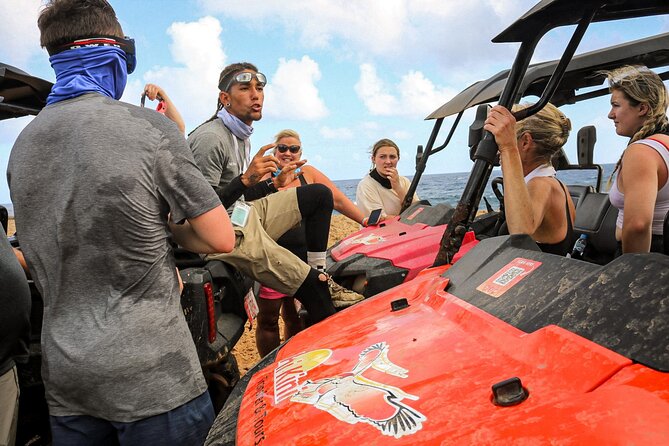
Aruba’s north side can be intense: bright sun, dry dust, and rough textures under tires. Even though safety gear is included, you still need to bring the right mindset and clothing.
From the provided recommendations, here’s the core checklist:
- Wear close-toed shoes
- Wear a swimsuit underneath your clothes
- Bring something to protect your eyes and face, because goggles are not included
Reviews add a lot of practical detail that you’d be smart to follow:
- Dust can be real, so consider a gator/neck covering or face cloth
- Bring water shoes if you plan to walk into rocky or splashy areas
- Some people recommend a towel for the wet-to-dry transition
- If you forget goggles, reviews say you can often purchase them at the shop or a local Do It Center
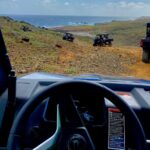
One more useful reality check: the ride is bumpy. Reviews use words like bumpy, dusty, and even Mars-like terrain. Translation: sit back, hold on, and let the guide set the pace. If you go in expecting a smooth city drive, you’ll end up tense.
Who this tour suits best (and who should consider another day)
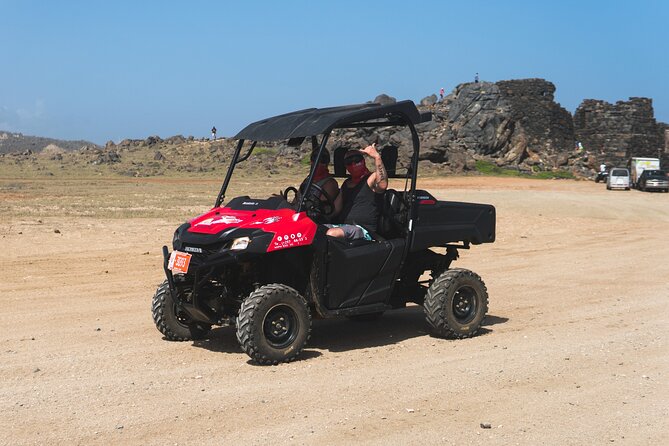
This Aruba UTV adventure is a strong fit if you want:
- A half-day that’s active from start to finish
- A mix of off-road paths and quick stops
- A small-group experience that doesn’t feel like a cattle drive
- Photos at the chapel, ruins, and rock formations
- A chance to cool off at the water stop, depending on conditions
It’s also a good choice for first-time off-road people because the route is guided and safety is emphasized. Reviews mention the experience can be manageable even for beginners, with supportive guides.
I’d reconsider this if you:
- Have a low tolerance for dust and rough terrain
- Don’t like physical activity that includes getting on/off uneven ground
- Are traveling with someone who can’t comfortably handle bumps for a few hours
The tour asks for a strong physical fitness level, so treat that as a real guideline, not a legal footnote.
Should you book Kini Kini’s Aruba 2-seater UTV tour?
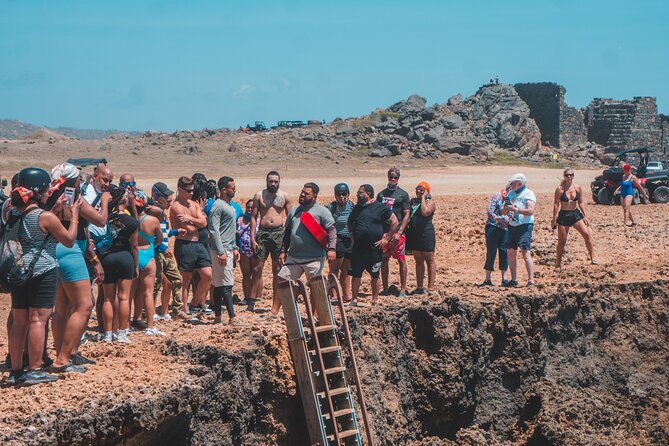
I’d book it if you want one outing that covers more than one side of Aruba: hilltop views at Alto Vista Chapel, a beach break at Wariruri (Baby Natural Bridge), rock-and-time at Bushiribana, and the Casibari rock formations for a different kind of Aruba scenery. The small-group cap (10) plus included pickup/drop-off makes it feel organized and efficient.
I’d skip it (or adjust expectations) if you’re hoping for a calm, easy tour. This is a bumpy, off-road experience. Bring proper protection for sun and dust, and accept that you’ll likely get messy. If that sounds fun, you’ll probably have a great time.
If you’re deciding between tours, ask yourself a simple question: do I want to drive (or ride) through Aruba’s interior and north coast in one half-day? If yes, this one is a solid bet.
FAQ
How long is the Kini Kini Aruba UTV tour?
It runs about 4 hours, approximately.
Do you get pickup and drop-off?
Yes. Pickup and drop-off are included from most hotels and the cruise port.
Can everyone drive the UTV?
No. By Aruban law, the driver must be at least 18 and have a valid driver’s license. Passengers under 18 can only ride.
Are the stop admissions included?
For the listed stops, the admission ticket is free.
What should I wear or bring for the tour?
Wear close-toed shoes and wear a swimsuit underneath your clothes. Goggles are not included, and bandannas are not included. Reviews also suggest having sun/face protection and water shoes if you plan to get in the water.
What’s the cancellation window?
Free cancellation is available up to 24 hours in advance for a full refund. It may be rescheduled or refunded if canceled due to poor weather or if a minimum number of travelers isn’t met.