REVIEW · ARUBA
Private Spanish Lagoon EcoHeritage E-Bike Tour
Book on Viator →Operated by Stezo Electric Solutions · Bookable on Viator
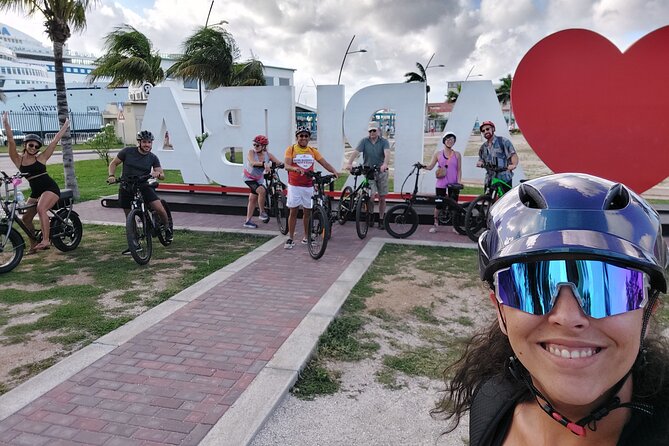
Aruba looks different from a bicycle.
This private Spanish Lagoon EcoHeritage e-bike ride pairs big coastal scenery with local backstreets, so you’re not stuck staring at the same beach strip. I like the way the route threads past famous beaches like Eagle Beach and then turns toward calmer, less commercial areas. I also like the built-in pacing: you get time to pause at heritage sites and still end the day feeling like you actually saw the island, not just checked boxes. One drawback to consider: it’s about 4 to 5 hours and you should have moderate fitness, since you’ll be cycling most of the route even with e-bike help.
The tour is designed for small groups and runs from Stezo E Bike Tours and Rentals in Oranjestad, looping through Spanish Lagoon area, Frenchman’s Pass, and multiple neighborhood corridors before returning to the starting point. If you’re lucky enough to have guide Stephanie, she’s known for calling out the kind of details you wouldn’t spot on your own—bird sightings like hummingbird nests and even rare birds that resemble an eagle. The main consideration is weather: the experience requires good conditions, and if it’s not right, you’ll be offered a different date or a full refund.
In This Review
- Key highlights worth planning around
- How the e-bike tour stays practical and feels truly Aruba
- Getting started at Stezo in Oranjestad (and what to expect from the ride)
- From Bubali Plas to Eagle Beach: the warm-up you’ll actually enjoy
- Oranjestad architecture and plazas: a change of pace before the shoreline returns
- Beach-to-town routing: Druif, Bushiri, Surfside, and the approach to Mangel Halto
- Spanish Lagoon and the Ramsar protection story you’ll actually understand
- Frenchman’s Pass: coral cliffs, a narrow corridor, and bridge views
- Balashi Gold Mill Ruins: a quick heritage stop with real context
- Donkey Sanctuary and neighborhood riding: seeing life beyond the main strips
- Huchada snack break: why the food stop makes the ride better
- Comfort, timing, and how to choose the right day
- Price and value: is $135 per person worth it?
- Should you book this e-bike tour or skip it?
- FAQ
- How long is the Spanish Lagoon EcoHeritage e-bike tour?
- How much does the tour cost?
- Is this tour private?
- What’s included in the price?
- Where does the tour start and end?
- What fitness level do I need?
- What happens if the weather is bad or I need to cancel?
Key highlights worth planning around
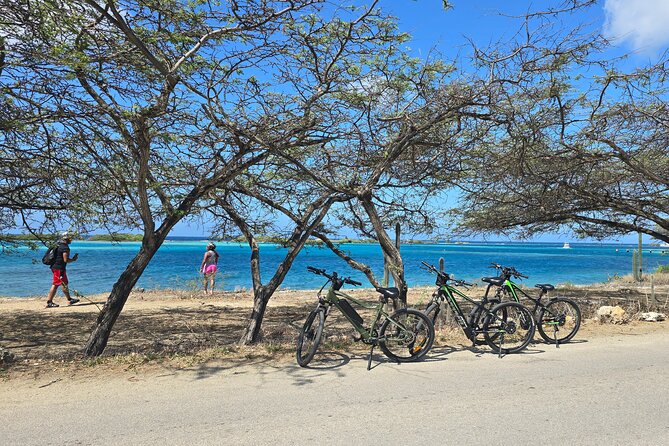
- Eagle Beach to San Nicolas routing: you’ll pedal past Aruba’s famous shoreline, then angle inland toward quieter zones.
- Spanish Lagoon is a protected wetland: the area is shielded under the Ramsar Convention on Wetlands.
- Frenchman’s Pass corridor views: a narrow passage between coral cliffs that sits above Spanish Lagoon.
- Balashi Gold Mill Ruins stop: a heritage visit tied to Aruba’s mining-era footprint, with a short, easy stop time.
- Snacks and drinks are part of the ride: coffee or tea, water, soda/pop, and an included local snack break.
- Stops mix wildlife, heritage, and neighborhoods: you’ll see places like the Donkey Sanctuary and pass through residential areas such as Pos Chiquito and Jamanota.
How the e-bike tour stays practical and feels truly Aruba
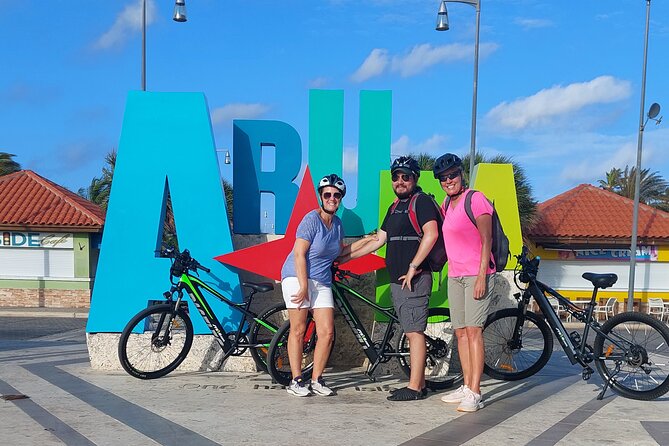
This is the kind of tour that makes sense on a small island. You’re not driving from one scenic spot to another with long transfers. Instead, you’re using e-bikes to keep momentum, so you can focus on what you’re seeing: beaches, bridges, wetland edges, and neighborhood life.
The best part is that the ride has a “local rhythm.” It starts in greener areas near Oranjestad, moves along iconic shoreline segments, then transitions into Spanish Lagoon and inland routes that show what’s beyond the usual postcard stops. Even if you like beaches (and Aruba is great for that), you’ll also get time to understand how the island’s history and nature sit right next to everyday streets.
You can also read our reviews of more cycling tours in Aruba
Getting started at Stezo in Oranjestad (and what to expect from the ride)
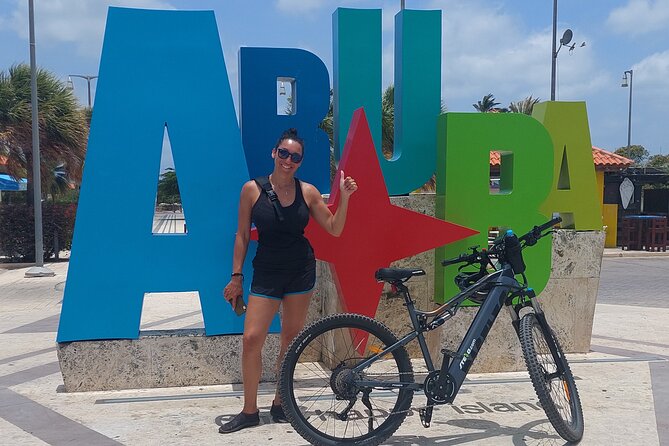
You begin at Stezo E Bike Tours and Rentals, L.G. Smith Boulevard 330, Kiosk 7-D, Oranjestad, Aruba, and the tour ends back at the same place. You’ll use a mobile ticket, which makes the start smoother when you’re juggling heat, sun, and the usual vacation logistics.
Physically, you’ll want a moderate fitness level. This matters because a “tour by e-bike” still includes sustained riding. E-bikes help with hills and longer stretches, but the route still expects you to be comfortable on a bike for much of the 4 to 5 hour window.
If you want a clear day-of plan, here’s the timing logic: you’ll ride continuously between stops, with short cultural or photo pauses, then a more substantial snack/rest break at Huchada.
From Bubali Plas to Eagle Beach: the warm-up you’ll actually enjoy
The route begins through lush green areas of Bubali Plas. That opening is smart because it eases you into the ride without launching you immediately into full sun and straight-on beach heat.
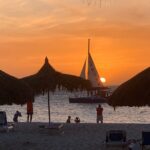
From there, you cycle next to Eagle Beach as you head toward San Nicolas. Expect sweeping coastal views and that classic Aruba feeling—bright light, open horizon, and beaches that look close enough to touch. This stretch is also your chance to settle into the e-bike ride: how your seat feels, how the assistance works for you, and how steady your pace is.
Even if you don’t care about beaches, this section matters because it sets the tone. The tour quickly teaches you one big theme: Aruba’s best scenes show up when you move, not when you sit still.
Oranjestad architecture and plazas: a change of pace before the shoreline returns
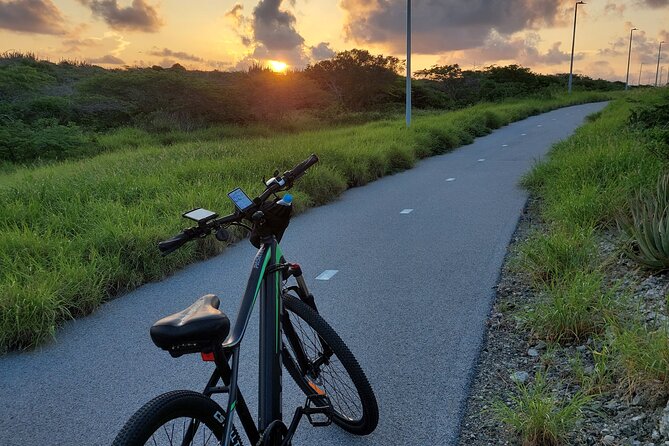
After the early beach section, you ride through Oranjestad’s colorful architecture and historical landmarks and plazas. This is where the tour stops feeling like a pure scenic commute and starts feeling like a guided understanding of the island.
You’ll pass through areas where you can read the island’s character quickly—painted building lines, town squares, and landmarks you’d probably miss if you were only driving with a checklist. It’s the same reason a walking tour works in cities: it’s harder for your eyes to “skim past” details when you’re moving slower than a car.
This part also helps you appreciate the contrasts later. When you head back out toward the coast and Spanish Lagoon, you’ll notice the shift in feel: more nature edges, more open terrain, fewer big commercial clusters.
Beach-to-town routing: Druif, Bushiri, Surfside, and the approach to Mangel Halto
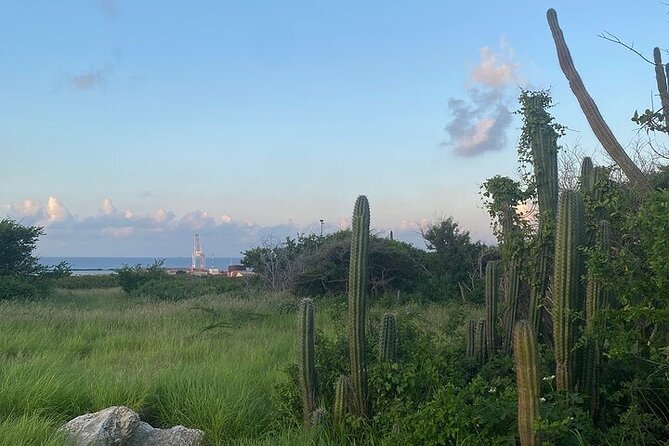
The tour continues along major beach segments on the way toward San Nicolas, including Druif Beach and others like Bushiri Beach and Surfside Beach as the route unfolds. You’re essentially tracing a coastline storyline, and the e-bike makes it possible without draining the day.
One detail I’d pay attention to is that the itinerary includes Mangel Halto later in the journey. That’s not just a name to collect; the ride context matters. You’re approaching it through routes that lead toward Spanish Lagoon, so the coastline doesn’t feel disconnected. It feels like one system—sand and sea, then wetland edges, then inland neighborhoods.
Along the way, you’ll also encounter a traditional local fisherman’s pier before reaching Mangel Halto. If you like seeing how people use the island day-to-day, this is one of those small moments that makes the tour feel grounded.
You can also read our reviews of more private tours in Aruba



Spanish Lagoon and the Ramsar protection story you’ll actually understand
This is one of the tour’s strongest reasons to exist. You cycle next to the protected area of Spanish Lagoon, and you get context for why it matters. Spanish Lagoon is officially shielded under the Ramsar Convention on Wetlands, which is a big deal for a place you might otherwise treat like scenery.
On a bike, you’ll feel the wetland side in a different way. You’re not just watching water from a lookout. You’re moving along the edges and corridors where nature shapes what’s around you. The guide’s stories help connect what you’re seeing—protected wetland land—with what it means for Aruba’s environment.
This section is also where you transition toward Frenchman’s Pass. The tour doesn’t present this like a lecture. It flows like a walk through a living system: ride, look, pause, then ride again.
Frenchman’s Pass: coral cliffs, a narrow corridor, and bridge views
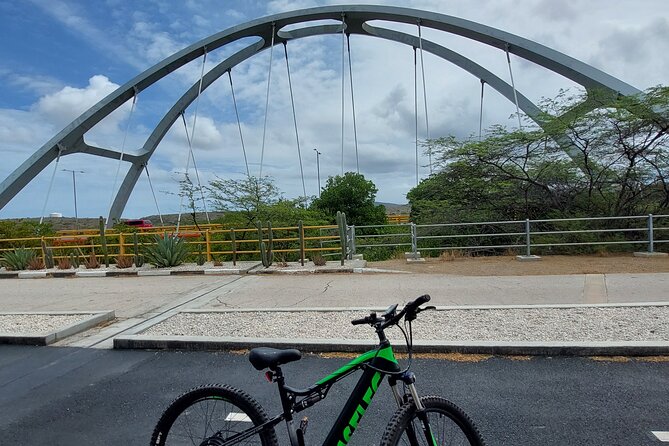
Frenchman’s Pass is described as a narrow passage in Aruba between coral cliffs above Spanish Lagoon. That line matters because it explains the feel of the place: a tighter, more dramatic corridor rather than an open viewpoint.
You’ll ride through areas on the way into and out of this zone, including passages that connect to the broader route toward San Nicolas. As you move, you’ll also get views of Aruba’s connecting bridges—Pabow di Brug and Pariba di Brug. These bridge moments break up the ride visually and give you something to photograph that isn’t just beach.
Practical tip: for bridge viewpoints and coastal edges, bring sunscreen and sunglasses even if the sky looks bright but calm. Aruba sun is relentless, and you’ll want your eyes comfortable for short stops.
Balashi Gold Mill Ruins: a quick heritage stop with real context
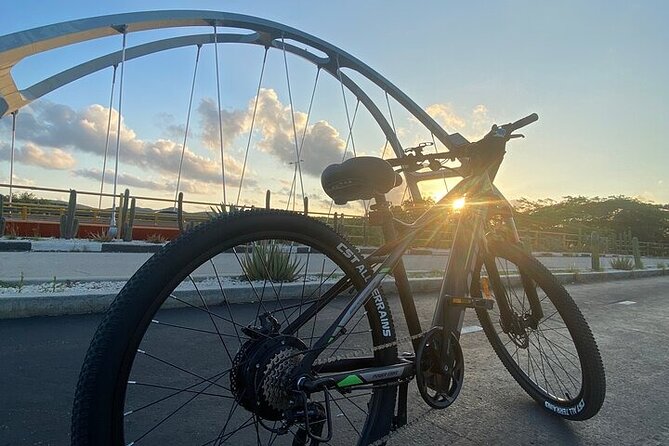
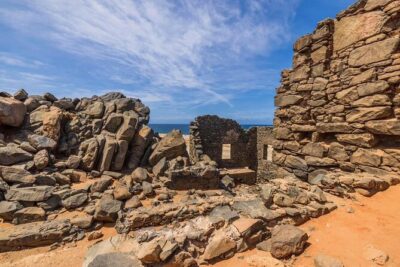
Next comes Balashi Gold Mill Ruins, tied to heritage and linked with the Frenchman’s Pass area. You’ll cycle through the corridor toward it, and the stop itself is brief—around 15 minutes—with an admission ticket listed as free.
In other words: this isn’t a long museum session. It’s a focused roadside heritage stop, which is exactly right for an e-bike day. You get the chance to see the ruins and connect them to Aruba’s past, without losing your whole afternoon.
You’ll also hear about the mill’s mining-era significance. One solid detail you can keep in mind before you arrive: Balashi Gold Mill Ruins are associated with construction dating to 1899. That gives the ruins weight. When you’re standing there, you’ll feel less like you’re looking at random rocks and more like you’re seeing the physical footprint of how Aruba worked in earlier times.
Donkey Sanctuary and neighborhood riding: seeing life beyond the main strips
The tour includes an option to cycle next to the Donkey Sanctuary. If you want a stop there, you can request it, and the guide can adjust. That flexibility is one of the quiet strengths of a private tour: you can lean toward wildlife and care spaces, or you can keep the momentum if you prefer scenery.
After that, you cycle through natural and residential neighborhood areas such as Bringamosa, Jamanota, San Fuego, Cas Ariba, and Cadushi Largo. You also pass through places like Pos Chiquito and Sabana Basora as you make your way between Spanish Lagoon and Frenchman’s Pass.
Why does this matter? Because it changes the shape of your Aruba day. You’re not only seeing the island from a resort-world perspective. You’re watching how the island’s geography shapes where people live and how streets connect to natural areas.
If you like architecture, street texture, and real-world Aruba rhythms, this part is where the tour tends to feel most “you’re actually here.”
Huchada snack break: why the food stop makes the ride better
At Huchada, the tour stops for refreshments and local Aruban snacks. This break runs about 45 minutes and includes admission listed as included.
I like snack stops on tours because they reset your body and sharpen your senses for what comes next. You’re already cycling in sun and heat, so having coffee/tea, water, and soda/pop as part of the included package sets you up to keep going without feeling worn out.
The snack piece matters too. You’re not stuck with generic travel food. You’ll also savor local snacks at a traditional Aruban bakery in Santa Cruz as part of the route’s food experience.
If you’ve ever done tours where food feels like an afterthought, this one avoids that trap. It builds the pause into the flow—so you ride, learn, rest, taste, and then keep riding.
Comfort, timing, and how to choose the right day
This tour runs about 4 to 5 hours. That time range is useful because it tells you how long you’ll be in motion with guided pauses. It’s not a short, quick highlight. It’s a true half-day commitment.
You’ll want to pick a day with good weather. The experience requires good weather, and if it’s canceled due to poor conditions, you’ll be offered a different date or a full refund. So if you’re trying to fit it between beach plans and a cruise schedule, keep some flexibility.
Also, plan around the sun. Even with e-bikes, you’ll be outside most of the time. Bring sun protection and consider light, breathable clothing.
At the end of the ride, you’ll cycle past aloe fields as you head back toward the starting area. That closing touch works well because it shifts you from heritage and lagoon edges back to the island’s agriculture and softer scenery.
Price and value: is $135 per person worth it?
At $135 per person, this isn’t a budget-only outing. But it can still feel like good value if you look at what’s included and what you skip.
Included in the price:
- Coffee and/or tea
- Local Aruban snacks
- Bottled water
- Soda/pop
You’re also getting a private tour setup, so it’s just your group on this route. And because the ride covers a long stretch of island variety—beaches, Spanish Lagoon protected area, Frenchman’s Pass, Balashi Gold Mill Ruins, optional Donkey Sanctuary, plus neighborhood segments—you avoid the cost and hassle of trying to piece it together with separate taxis and day-trip planning.
In plain terms: you’re paying for time, guidance, and a way to cover terrain comfortably without feeling rushed.
Should you book this e-bike tour or skip it?
Book it if you want:
- A half-day Aruba experience that mixes beaches with protected nature and heritage
- Private guiding on a route that includes neighborhoods, not just the postcard strip
- A ride built around stops and snacks, not nonstop sightseeing pressure
Skip it if:
- You’re not comfortable cycling for long stretches, even with e-bike assistance
- You dislike weather-dependent activities and you need a fixed plan with no flexibility
- You only want a beach day and nothing else
FAQ
How long is the Spanish Lagoon EcoHeritage e-bike tour?
It lasts about 4 to 5 hours.
How much does the tour cost?
The price is $135.00 per person.
Is this tour private?
Yes. It’s a private tour/activity, so only your group participates.
What’s included in the price?
Coffee and/or tea, local Aruban snacks, bottled water, and soda/pop are included.
Where does the tour start and end?
It starts at Stezo E Bike Tours and Rentals at L.G. Smith Boulevard 330, Kiosk 7-D, Oranjestad, Aruba, and it ends back at the meeting point.
What fitness level do I need?
You should have a moderate physical fitness level.
What happens if the weather is bad or I need to cancel?
The experience requires good weather. If it’s canceled due to poor weather, you’ll be offered a different date or a full refund. You can cancel for a full refund up to 24 hours in advance of the experience start time.