REVIEW · ARUBA
Aruba 2-Tank guided Dive for certified divers / own equipment
Book on Viator →Operated by Pure Diving Aruba · Bookable on Viator
Two tanks, calm sites, and great eyes underwater.
I like the simple focus here: a small group and guided scuba coaching at two different underwater locations. You get the benefit of staying down longer with the second tank, without the busy feel that can come with larger groups. Plus, the whole plan runs in the morning window, typically from about 9 am to around 1 pm.
What I really like is the way this trip is set up for people who already know how to scuba—certified divers only—and want hands-on guidance. You’ll also get island-wide convenience with pickup and drop-off from set hotels, so you’re not burning time figuring out logistics. One more nice touch: a free snack-style stop with fresh fruit and drinking water before you head in.
The main thing to watch is equipment. This is for your own scuba gear, and if you’re missing parts, rentals are available at the shop for a fair price, but you’ll need cash. On top of the $109 price, you’ll also pay a local government tax of 7%.
In This Review
- Key things to know before you go
- Morning Logistics in Oranjestad: pickup, timing, and where you meet
- Two Tanks, One Calm Plan: what the morning schedule actually feels like
- Coral reefs and shipwrecks: what you’re aiming for under Aruba skies
- Your gear setup: the part you control before you hit the water
- Small-group coaching with Alonzo and the rest of the crew
- Price and value: is $109 fair for a two-tank guided outing?
- What to bring (and what to skip) so you’re not scrambling
- Who this Aruba two-tank trip is best for
- Should you book this Aruba two-tank scuba trip?
- FAQ
- How long is the Aruba two-tank guided scuba trip?
- What time does the trip start?
- Where do I meet for the activity?
- Do you offer pickup?
- Is this only for certified divers?
- Do I need to bring my scuba equipment?
- How many tanks are included?
- Is there a minimum age requirement?
- Can I fly right after the scuba sessions?
- What’s the extra cost besides the $109 price?
- What is the cancellation policy?
Key things to know before you go
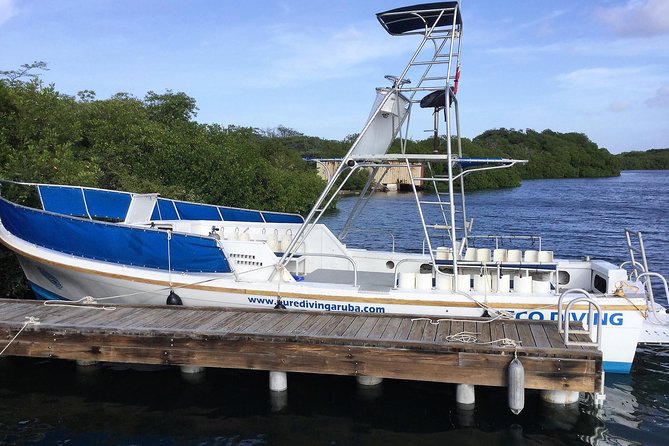
- Max group size is small (6 travelers), which means more personal attention
- Two tanks total so you spend more time looking around underwater
- Pickup is included from select resorts and the cruise terminal area
- Southern Aruba sites with coral reef and shipwreck options in quieter waters
- Often shore-starts and boat sessions (with the Drumfish as the main boat when used)
- Alonzo-sized coaching energy shows up in the best-rated feedback
Morning Logistics in Oranjestad: pickup, timing, and where you meet
This is a half-day style outing that runs about 4 hours total, starting at 8:30 am. You’ll meet at the operator’s location on Bucutiweg in Oranjestad, and the tour ends back at that same meeting point.
If you’re staying in a hotel covered by the pickup list, it’s easy. Pickup is included from Palm/Eagle resorts, Harbor House, and Renaissance resorts. If you’re on a cruise, you’ll also have pickup—head to the cruise terminal pickup area outside gate 3, in front of the Harley Davidson shop.
For me, what makes morning logistics matter is simple: you want your brain on the water, not on “where do we go next?” The pickup-and-drop system removes most of that stress, and the fresh fruit plus drinking water adds a little buffer before your first tank.
Also note the mobile ticket. Bring it with you on your phone so you can check in quickly.
You can also read our reviews of more guided tours in Aruba

Two Tanks, One Calm Plan: what the morning schedule actually feels like
The experience is built around two underwater sessions at two different sites on Aruba’s southern side. That area tends to feel calmer than the busiest tourist circuits, and the plan is specifically designed for people who want less crowd pressure while still seeing good marine life.
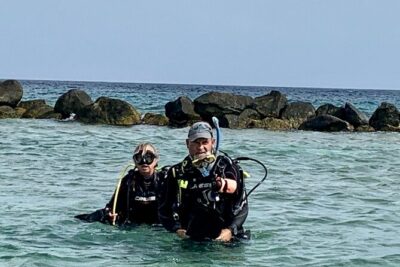
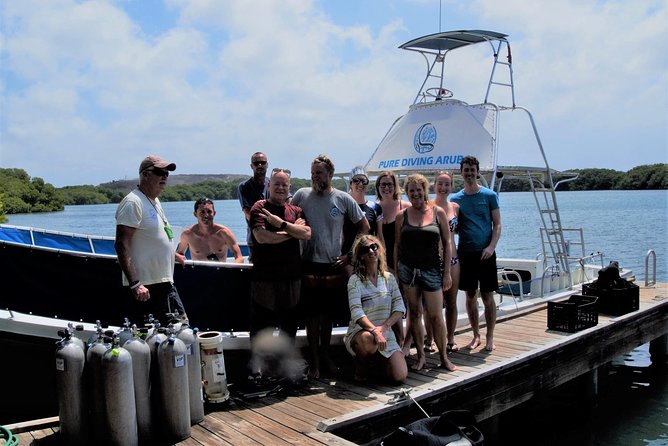
Your group moves in a tight band. The operation lists a maximum of 6 travelers, and the experience is guided for certified divers. That small number is more than a nice-to-have. It changes the way the trip works: the instructors can keep track of buoyancy, spacing, and comfort, and you’re not just a number in a line.
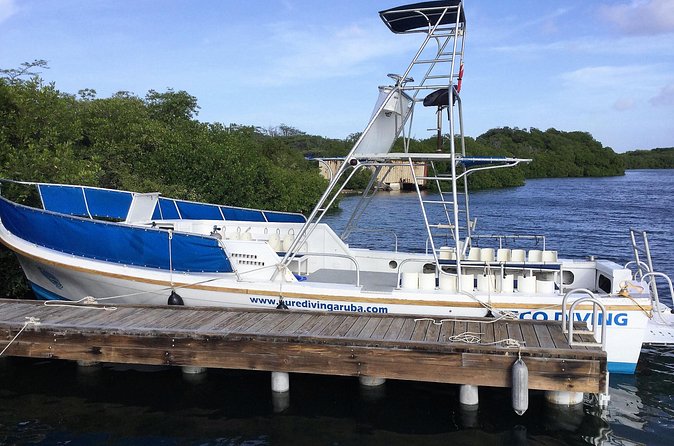
Between roughly 9 am and about 1 pm, you’ll go to both sites. Sometimes the first part is from shore, and sometimes it’s done mostly by boat. When the boat is used, it’s typically their Drumfish vessel, described as charming in the trip notes. Translation: you’re not stuck on a long boat ride just to start.
And yes, the second tank is a big deal for your actual experience. Two-tank trips usually mean you’re not rushed into a quick look and then out. You get more time underwater to watch behavior—fish cruising, reef activity, and the little moments that you often miss when the timing is tight.
Coral reefs and shipwrecks: what you’re aiming for under Aruba skies
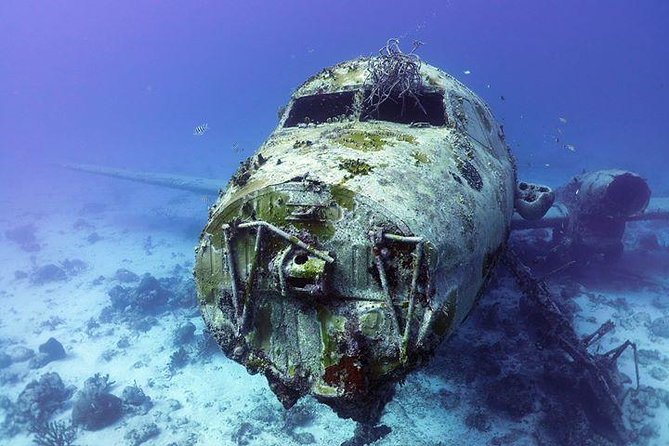
This trip is designed around coral reef and shipwreck type underwater environments. Those two settings are where you tend to find the most variety, from reef residents to fish that use structure for cover and hunting.
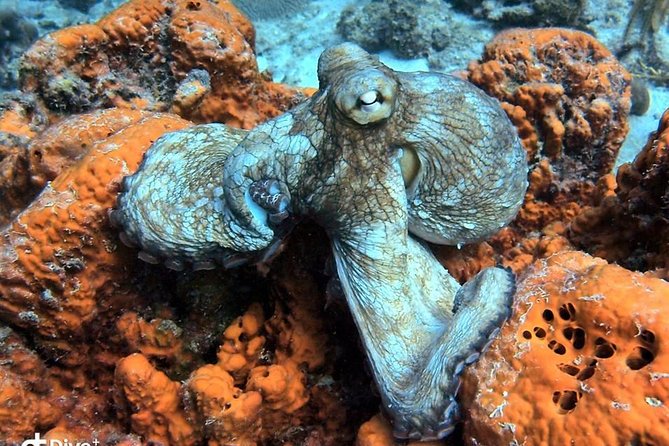
The best-rated feedback puts a clear spotlight on reef quality. One standout review specifically called out visibility and corals as top-notch, and mentioned seeing lots of green eels and other fish. That matches the overall goal of this itinerary: increase your odds of spotting more diverse marine life by choosing sites with different underwater “real estate.”
Shipwreck areas add another layer. Even if you’re focused on “rare sightings,” wrecks often deliver because they create shelter and hunting lanes. The tradeoff is that conditions can vary by day, and the instructor will guide you based on what’s safe and what’s worth your time in the moment.
A practical tip for your mindset: when you’re going for marine life, don’t just stare at the biggest thing you see. Look for movement in the mid-water, then scan the reef edges and structure. This is where the small-group guidance helps, because your instructor can help you stay oriented and stay with the group while still getting your own viewing time.
Your gear setup: the part you control before you hit the water
Here’s the truth: when scuba gear is set up right, the trip feels smooth. When it isn’t, you spend the first part of the experience fighting discomfort.
This outing uses your own equipment. That means you should prepare your scuba set before you go so you feel comfortable with it during the session. If you need a hand getting everything in place, the instructors can help when necessary.
If you’re missing parts, the shop can rent what you need, but you’ll pay directly (the notes say cash please). The price is described as fair, but the key is timing—don’t assume you can fix everything last minute.
Also, after your last tank, there’s one more life rule: you’re not allowed to fly for at least 24 hours. That’s a real “plan your day” detail. If you’re stacking this with a flight, build in enough buffer. Even if your schedule is tight, don’t test the rule. It’s there for safety, and the operator flags it clearly.
Small-group coaching with Alonzo and the rest of the crew
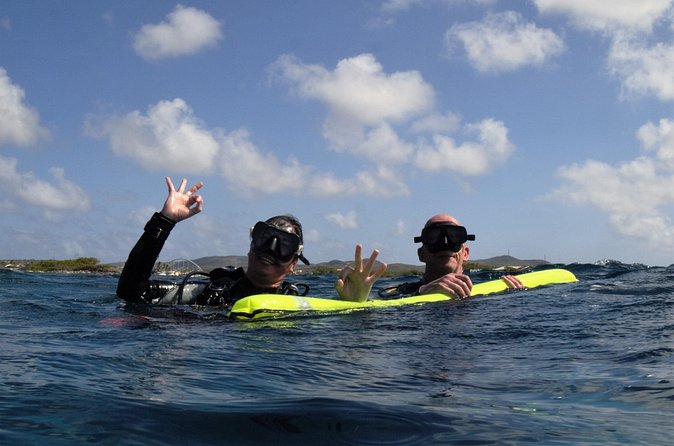
What makes guided scuba trips feel good isn’t the gear. It’s the guidance style: keeping the group together, helping you stay relaxed, and pointing out what’s worth your attention.
The feedback here is very strong on the guide experience. One review highlighted the guide Alonzo as the best, and praised the overall quality of the two underwater sessions. Another thank-you response also mentioned an instructor in training, showing the operation has staff supporting divers beyond just showing up and leading the way.
So what can you expect from the coaching, in plain terms?
- You’ll be guided along the coral reef or wreck areas during each underwater session
- You’ll get help if your equipment setup needs adjusting
- You’re less likely to feel lost or “left behind,” because the group size stays small
If you’re an intermediate or expert diver, you’ll probably like that the plan isn’t aimed at teaching from scratch. It’s about adding structure and site selection to what you already know. If you’re a confident diver but want a calm, guided flow, this also fits well.
The funny thing about scuba is that it’s equal parts concentration and curiosity. Good instructors help you keep both. You can keep your focus on buoyancy and breathing while still looking around long enough to notice green eels, fish activity, and reef texture—exactly what people praised in the top feedback.




Price and value: is $109 fair for a two-tank guided outing?
The listed price is $109 per person, and you’ll typically book about 42 days in advance on average. That matters because popular Caribbean activities often sell out or tighten up on dates.
What you’re getting for the money is pretty practical:
- Two underwater sessions (two tanks total)
- Guided supervision by trained staff
- Pickup and drop-off from multiple hotel areas
- Fresh fruit and drinking water included
What’s not included is also clear:
- Scuba equipment (with optional rentals at the shop for missing parts)
- A local government tax of 7%
So is it value? For me, it’s strong if you already have your gear, because you’re paying mostly for guidance, site access, and the logistics support that keeps your day easy. If you need to rent equipment parts, the cost can rise, but the rental option is still part of the overall structure—not a surprise add-on.
Also consider the time cost. If you weren’t doing pickup, you’d either pay for transport or lose time. Paying $109 and getting pickup tends to feel fair once you’re on the island.
What to bring (and what to skip) so you’re not scrambling
Because this trip expects your own scuba equipment, your packing list is mostly about being ready to breathe easy in your setup. Bring your regulators, BCD, tank-related gear, and anything else you normally bring for a certified scuba outing.
If you forget parts, the shop can cover missing items, but you’ll want to avoid that if possible. The notes specifically say rentals are available at the shop against fair prices with cash.
Other helpful things:
- Your certification info (this is only for certified divers)
- Your mobile ticket for quick check-in
- A plan for the no-fly rule for at least 24 hours after
One last detail: the trip is set for a morning start, so arrive rested enough to do two sessions. Scuba works best when you’re not rushing or stressed right at the check-in window.
Who this Aruba two-tank trip is best for
This is a great match if you’re:
- A certified diver who already has your scuba gear
- Looking for two underwater sessions in a morning window
- Interested in coral reef life and shipwreck environments
- Hoping for more personal attention than big-group outings
It also fits if you like the idea of a small operation—maximum 6 travelers—because that tends to create a calmer experience underwater. The top-rated feedback also lines up with people who care about visibility and coral quality, plus actual marine sightings like green eels.
The age limit is 10 years minimum, so it can work for older kids who are certified and comfortable with the requirements.
If you’re not certified, this won’t be for you. If you need to fly soon after, you’ll have to rethink timing because you’re not allowed to fly for 24 hours.
Should you book this Aruba two-tank scuba trip?
If you’re certified, have your own equipment, and want a guided morning with two tanks, this is an easy yes. The small group size and the strong guide scores—especially the praise for Alonzo—signal that you’re not just paying for gear and transport. You’re paying for a smoother day and better underwater attention.
Book it especially if you care about reef conditions and want a good chance at real marine life sightings, not just a quick pass. The coral and visibility praise in the feedback is exactly the kind of thing you feel quickly once you’re underwater.
Skip it if you don’t meet the certified requirement, if you’re missing key gear and hate the idea of last-minute rentals, or if your flight schedule doesn’t leave the required 24-hour buffer.
FAQ
How long is the Aruba two-tank guided scuba trip?
It runs for about 4 hours total.
What time does the trip start?
The start time is 8:30 am.
Where do I meet for the activity?
You meet at Pure Diving Aruba on Bucutiweg in Oranjestad, and the trip ends back at the same meeting point.
Do you offer pickup?
Yes. Pickup is offered from Palm/Eagle resorts, Harbor House, Renaissance resorts, and the cruise terminal area outside gate 3 in front of the Harley Davidson shop.
Is this only for certified divers?
Yes. The activity is only for certified divers.
Do I need to bring my scuba equipment?
Yes. Dive equipment is not included. If you are missing parts, the shop can rent them for fair prices, with cash please.
How many tanks are included?
You’ll do two tanks total as part of the guided plan.
Is there a minimum age requirement?
Yes. The minimum age is 10 years.
Can I fly right after the scuba sessions?
No. You are not allowed to fly for at least 24 hours after diving.
What’s the extra cost besides the $109 price?
The local government tax of 7% is not included. If you need equipment rentals, those are additional as well.
What is the cancellation policy?
You can cancel for free up to 24 hours in advance for a full refund. If you cancel less than 24 hours before the start time, the amount paid is not refunded.