REVIEW · ARUBA
Aruba Downtown Historic and Cultural Walking Tour
Book on Viator →Operated by Aruba Walking Tours · Bookable on Viator
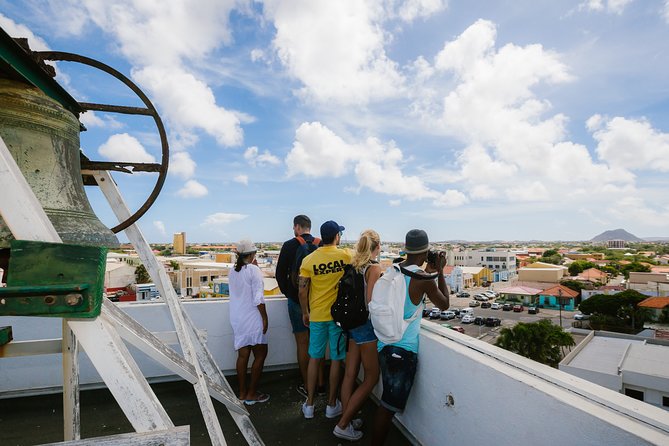
Oranjestad tells its story one block at a time. I love the Fort Zoutman clock-tower climb and the Pan Bati snack stop, which make the history feel real. One caution: the route is packed with about 30 stops, so you get quick “see it” moments at museums and churches rather than long reading time.
This is a small-group walk (up to 20 people) that starts at 9:00 am, when the streets are more comfortable. You’ll get a mobile ticket, you can join in all-weather conditions, and you’ll want solid walking shoes and breakfast first to beat Aruba’s heat.
In This Review
- Key highlights worth planning for
- Oranjestad on Foot: What This Tour Does Best
- Where You Start: Cosecha Craft Design & Heritage in Oranjestad
- Fort Zoutman Historical Museum: 1700s Fort, 1800s Clock Tower
- Wilhelmina Park: Statues, Iguan(d)as, and Local Texture
- National Archaeological Museum Aruba: First Inhabitants in Plain View
- Coco Plum Restaurant: Pan Bati and the Joy of Eating What Locals Eat
- Oranjestad Stories on the Main Street: Mansions, Trams, and Old Shops
- Government and Power: Parliament and How Aruba Runs Its Day-to-Day
- Churches and Religion: A Look at the Protestant Church in the 1800s
- Breakfast at Havenstraat and Neighborhood Houses on Wilhelminastraat
- Staying Comfortable: Heat, Pacing, and Why 30 Stops Can Feel Fast
- Price and Value: Is $45 a Good Deal for Oranjestad?
- Who Should Book This Tour (and Who Might Skip It)
- FAQ
- How long is the Aruba Downtown Historic and Cultural Walking Tour?
- What is the price per person?
- Where do I meet for the tour?
- What time does the tour start?
- Is the tour a long, difficult walk?
- Are museum entrance fees included?
- What food is included in the tour?
- Is there a group size limit?
- Can I get picked up from my accommodation?
- Can cruise passengers book this tour?
- Is free cancellation available?
Key highlights worth planning for
- Fort Zoutman clock tower views from an old 1800s tower over Oranjestad
- Pan Bati tasting at Coco Plum Restaurant, a local favorite you can actually remember
- Two museum-style stops with included entrance fees (when open)
- A manageable downtown loop with around 30 short stops, led by a multi-lingual guide
- Historic government, church, and Parliament stories that explain how the island works
- Pick-up from selected accommodations to reduce the stress of getting downtown
Oranjestad on Foot: What This Tour Does Best
Aruba’s capital, Oranjestad, can feel like a place you drive through fast—until someone points out the details. This walking tour is built for that shift. In about 2 hours 30 minutes, you move through downtown and learn why the streets look the way they do: the fortifications, the religious sites, the political institutions, and the everyday food culture.
The tour also makes learning practical. You don’t just hear facts. You get tips on where to eat, drink, and see—useful on a trip where you only have a few afternoons. It’s the kind of experience that helps you come back to the places you liked later and explore at your own pace.
One trade-off: because it covers many stops, you’ll have limited time inside some buildings when you want to read every exhibit label. If you love museums, treat this as orientation, then plan a return.
You can also read our reviews of more walking tours in Aruba
Where You Start: Cosecha Craft Design & Heritage in Oranjestad
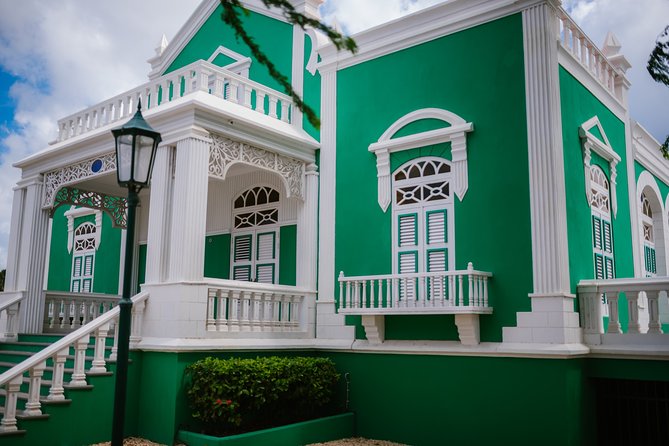
You meet at Cosecha Aruban Craft Design & Heritage on Zoutmanstraat 1. This is a smart starting point because it’s already tied to the island’s creative side—your walk begins near a historic government building that now features local arts and crafts made by accredited locals.
Arrive a few minutes early, especially if you’re new to Oranjestad. A couple of visitors noted it’s not the easiest meeting spot to find instantly, so “early” beats “searching with a sweaty neck.”
If you’re staying near major hotels, you may be able to get pickup from selected accommodations, which helps a lot if you don’t want to figure out buses or taxis on your first morning.
You also get a mobile ticket. That’s one less thing to manage before you leave your hotel.
Fort Zoutman Historical Museum: 1700s Fort, 1800s Clock Tower
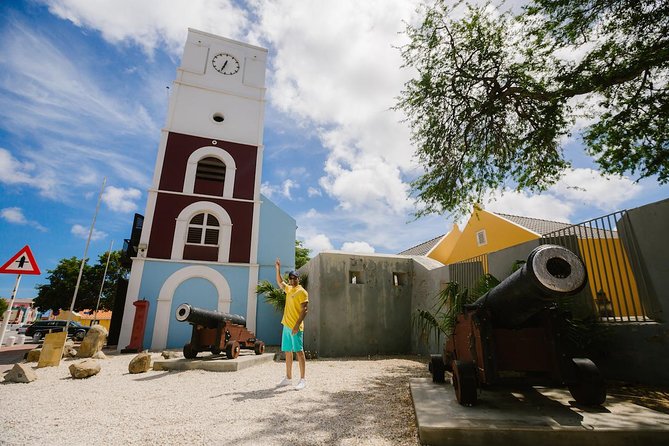
Fort Zoutman is the kind of first stop that sets the tone. Aruba has a history shaped by European powers, and this old fort—built in the 1700s—shows how the island protected itself long before today’s cruise crowds.
When the historical museum is open, you step inside to see how the fort’s story is told. Then comes the part I’d personally schedule for: climbing the old clock tower, built in the 1800s. From up there, the view gives you instant context for the rest of the tour. You can see how downtown is laid out and how the streets connect.
If you’re short on energy, the tower climb might still be worth it. It’s not just a photo moment; it helps you understand why Oranjestad developed where it did.
Wilhelmina Park: Statues, Iguan(d)as, and Local Texture

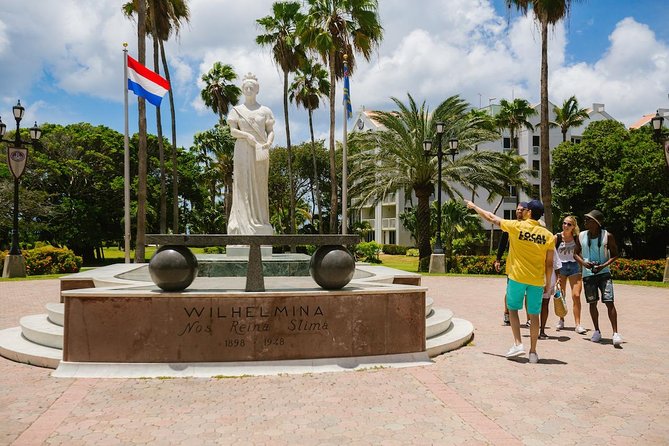
Next you head to Wilhelmina Park. This stop is short, but it adds a needed change of pace. You’ll learn about two impressive statues in the park—and yes, you may see iguanas hanging around.
This is one of those pauses that keeps the tour from feeling like pure classroom time. It also helps you notice how animals and public spaces coexist in Aruba’s city life. Even if you’re not trying to photograph iguanas, it’s a real reminder that Oranjestad isn’t only museums and monuments—it’s streets where people live and pass through.
If you’re the type who likes small details, this stop tends to be the one you remember later.
National Archaeological Museum Aruba: First Inhabitants in Plain View
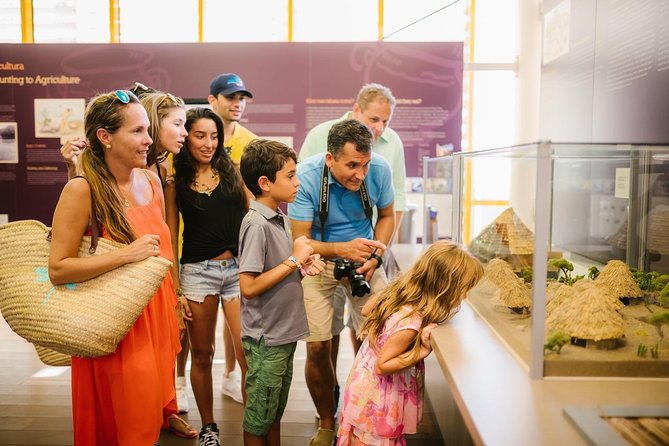
The National Archaeological Museum Aruba is where the tour shifts from colonial-era structures to deeper time. When the museum is open, you visit inside and learn about Aruba’s first inhabitants.
You’ll see pottery, skulls, and tools used in early days. The exterior also makes a great backdrop for pictures, so even if you only get a quick look inside, you still come away with something visual.
Because the stop is brief, use this visit as a “What should I look for later?” moment. If the museum’s themes genuinely grab you, you’ll know what section to revisit on a different day.
You can also read our reviews of more historical tours in Aruba


Coco Plum Restaurant: Pan Bati and the Joy of Eating What Locals Eat
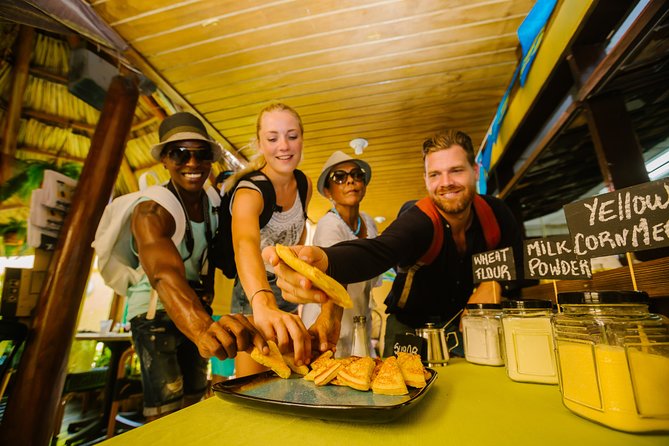
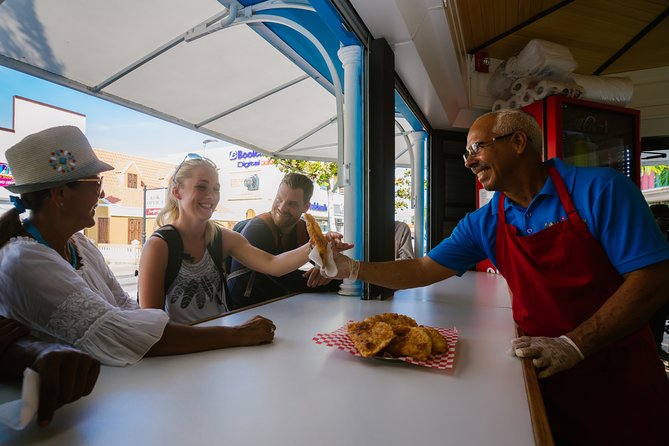
Food tastings are built into the experience, and this is where the tour earns extra points. At Coco Plum Restaurant, you learn about and taste a local snack called Pan Bati. It’s still popular and widely consumed by locals, which is exactly the kind of “not just tourist food” win you want.
You get one tasting here, plus another tasting later during the route. If you’re picky about food tours that feel like a sales pitch, this one tends to feel practical because the snack is explained in context—why it matters, where it fits in local eating habits, and what to expect in flavor.
Also, Aruba can get hot fast. Having a planned food stop with tasting time helps you pace your energy without “accidentally” skipping lunch.
Oranjestad Stories on the Main Street: Mansions, Trams, and Old Shops
After the museum and park rhythm, you return to the street-level story. You walk along Aruba’s main commercial stretch and learn about stores that have been in place since 1928. It’s a simple way to understand longevity here: some businesses outlast trends.
You’ll also hear about the street car or tram that passes through the area. Even if you don’t ride it during the tour, knowing the route exists helps you plan how to get around downtown afterward.
One of the more story-driven moments comes with a stop around Oranjestad family mansions built in the early 1900s. The guide shares a romantic story about one of Aruba’s iconic mansions—these personal stories are what turn architecture into something you can picture later.
Government and Power: Parliament and How Aruba Runs Its Day-to-Day
Oranjestad isn’t only buildings with old paint. You also get a clear look at politics and how laws are debated locally.
At the Aruba Parliament stop, you hear about the island’s political system and where local politicians debate on current affairs and laws. Even if politics isn’t your favorite topic, this makes the “how does this place work?” question easier to answer.
There’s one thing to consider, though. Some guides naturally lean into political commentary when they connect history to present systems. If you want the tour to stay strictly factual and light, you might mentally note that the Parliament stop can be the most opinion-shaped part of the walk.
Churches and Religion: A Look at the Protestant Church in the 1800s
Next comes a religious landmark: the Protestant Church, built in the 1800s. You learn how Protestantism arrived on the island and also an important detail—Protestants are not the largest religion on Aruba.
This stop matters because it broadens the tour beyond European history-as-a-skeleton. It connects belief systems to how communities formed and how Aruba’s identity developed over time.
Like the museum stops, the duration here is brief. If you’re the type who wants to read every sign and plaque, you may wish you had more minutes inside the church.
That’s normal. Aruba’s sun doesn’t slow down, so the guide has to keep the schedule moving.
Breakfast at Havenstraat and Neighborhood Houses on Wilhelminastraat
You’ll also make time for two very “daily life” style stops.
At Havenstraat, the focus is food—what Arubans eat for breakfast and at parties. This is a reminder that culture lives in routines, not just in monuments. When your guide talks about breakfast and party foods, you start seeing why certain local dishes show up again and again.
Then you move to Wilhelminastraat, a residential street where you can observe where locals live. The guide points out iconic houses, which helps you understand how architecture carries social identity even outside the obvious tourist zone.
These neighborhood moments are often what make the walk feel grounded. It doesn’t only point at big sights; it helps you sense the city as a lived-in place.
Staying Comfortable: Heat, Pacing, and Why 30 Stops Can Feel Fast
The biggest practical challenge is timing and heat. The tour is designed to run in all weather conditions, and it starts at 9:00 am for a reason. You’ll walk in daylight and you’ll be outdoors between stops.
You’ll get a note to have breakfast before you go, and I strongly agree. Aruba sun can be strong enough that skipping breakfast makes everything feel harder than it should.
As for pacing: with around 30 stops and lots of short segments (some are just a few minutes), you’ll be in constant motion. This is great for coverage, but it’s not great for people who want deep museum reading time. If you prefer slower travel, plan a separate afternoon where you return to whichever building you found most interesting.
Also, bring water habits seriously. The tour includes tastings, and some guides provide cold water along the way, but you’re still outside for a long stretch. Comfortable shoes are non-negotiable.
Price and Value: Is $45 a Good Deal for Oranjestad?
At $45 per person, this tour is priced like an informed downtown orientation—not like a major excursion. The value comes from a few concrete items:
- Two museum-style stops with entrance fees included when open
- Two included tastings, including Pan Bati at Coco Plum Restaurant
- A local guide leading you through a packed downtown route where you’d otherwise miss context
- A small group size (max 20), which makes it easier to ask questions
- Pickup from selected accommodations, depending on where you’re staying
If you’re the kind of traveler who likes “just the basics,” this tour gives you a foundation quickly. If you’re the kind who loves history, it can feel like a strong start with obvious places to revisit.
Where the price can feel less satisfying is when you strongly prefer long museum time. This tour doesn’t stretch out. It hits highlights and keeps moving.
Who Should Book This Tour (and Who Might Skip It)
Book it if:
- You’re doing your first Aruba morning and want a solid sense of Oranjestad quickly
- You like architecture, churches, and local government stories—not only beaches
- You want Pan Bati and at least a couple food tastings built into the schedule
- You enjoy walking with a guide and learning how today connects to yesterday
Consider skipping or supplementing it if:
- You want lots of time to read exhibits and sit with collections
- You dislike political commentary, since Parliament can pull the discussion toward systems and how Aruba works
- Heat is a major issue for you (the morning start helps, but it’s still an outdoor walk)
FAQ
How long is the Aruba Downtown Historic and Cultural Walking Tour?
It runs about 2 hours 30 minutes.
What is the price per person?
The tour costs $45.00 per person.
Where do I meet for the tour?
You meet at Cosecha Aruban Craft Design & Heritage, Zoutmanstraat 1, Oranjestad, Aruba.
What time does the tour start?
It starts at 9:00 am.
Is the tour a long, difficult walk?
It’s described as walking through downtown with many short stops. The tour operates in all weather conditions, so comfortable walking shoes matter, especially in warm temperatures.
Are museum entrance fees included?
Entrance fees are included for the museum stops when they’re open.
What food is included in the tour?
There are two included tastings, including Pan Bati at Coco Plum Restaurant. The tour also highlights other local food topics as you walk.
Is there a group size limit?
Yes. The maximum group size is 20 travelers.
Can I get picked up from my accommodation?
Pickup is available from selected accommodations.
Can cruise passengers book this tour?
Cruise passengers with Carnival Cruise Lines, Holland America, Princess Cruises, and P&O Cruises have to book through the ship’s website or on board. Other cruise lines require ship name, docking time, disembarkation time, and re-boarding time at booking.
Is free cancellation available?
Yes. You can cancel up to 24 hours in advance for a full refund.