REVIEW · ARUBA
Epic Off-Road Surron Electric Bike Tour in Aruba
Book on Viator →Operated by Epic Trail Bikes & Tours · Bookable on Viator
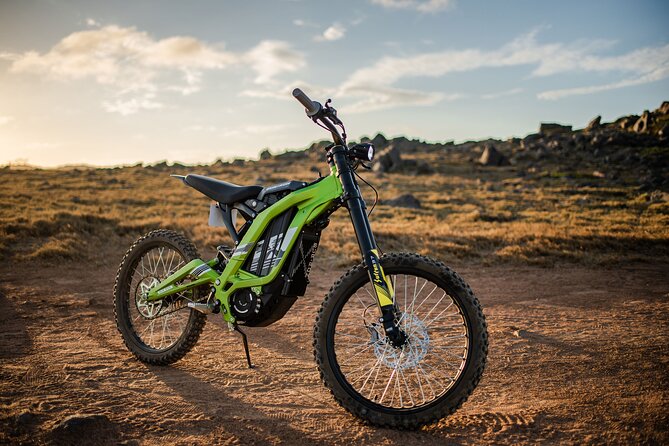
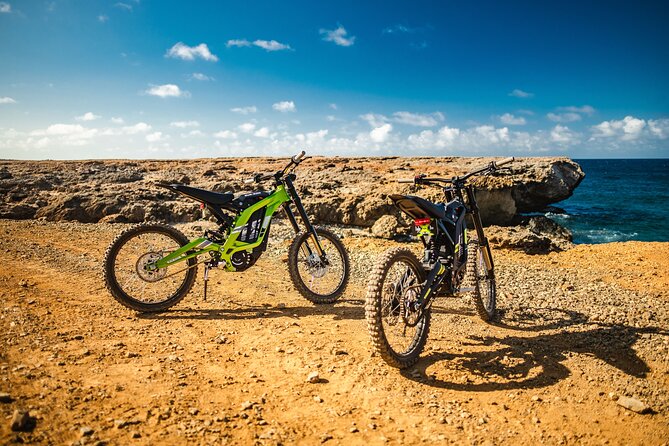
Electric bikes plus Aruba’s wild north coast is a smart combo. This 3 to 4 hour Surron off-road electric bike tour takes you along rugged trails to Ayo Rock, secluded coves, gold-rush ruins, and the California Lighthouse, with time to pause for views and wildlife. I especially love the max 5 person group size, which keeps things calm and gives you room to learn, and I like the safety start with a proper briefing plus a practice session before you roll out.
One drawback to plan for: this ride is not a casual beach-cruiser. You’ll need a driver license, wear long pants and long sleeves, use closed-toe shoes, and expect uneven, rocky trail riding even if the guide adapts the pace.
In This Review
- Key things that make this tour worth your time
- What $160 buys: Surron power, gear, and a tight group
- Santa Cruz check-in: safety briefing and bike practice that actually helps
- Ayo Rock formations and Tripod Bridge: the north coast ride begins
- Blackstone Beach and Andicuri: walks that feel like you escaped the roads
- Natural Bridge Aruba and the Bushiribana Gold Mill Ruins
- Wariruri Bay and Alto Vista Chapel: coastal air plus a quiet spiritual stop
- California Lighthouse finale: the ride ends with big views
- Who this Aruba Surron tour is best for
- Should you book Epic Off-Road Surron e-bike tour in Aruba?
- FAQ
- How long is the Epic Off-Road Surron e-bike tour?
- What does it cost?
- What’s included in the price?
- Do I need a driver license to ride?
- What is the minimum age?
- What should I wear?
- How large is the group?
- Where does the tour start and end?
- What if the weather is bad, or I need to cancel?
Key things that make this tour worth your time
- Small group (max 5) means less waiting and more hands-on guidance.
- Surron off-road electric bikes make rugged trails feel doable, not exhausting.
- Safety briefing + practice session helps you get confident fast.
- North Coast variety: rocks, beaches, ruins, chapel, and lighthouse in one route.
- A guide-led history layer adds meaning to the stops, not just photos.
- Pickup and drop-off included so you spend less time wrangling logistics.
What $160 buys: Surron power, gear, and a tight group
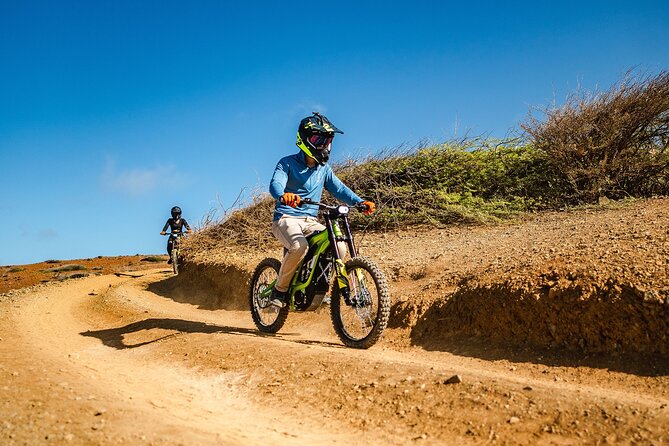
At $160 per person, this is a mid-range Aruba activity where you’re paying for a real off-road experience, not just a scenic drive. You get the use of the Surron off-road electric bike, a certified local guide, a helmet, and bottled water, plus free pick-up and drop-off. When you add up the bike, guide, and gear time, the price starts to make sense, especially if you’re comparing it to tours where you spend more time riding in vehicles and less time on the trails.
The biggest value lever is the group size. With a maximum of 5 travelers, the tour doesn’t feel like cattle herded from stop to stop. That matters on a bike tour, because confidence and control are built in the moment—how the group spaces out, how quickly you learn braking and throttle, and how the guide handles rough patches.
Another smart part: this is built for Aruba’s north side specifically. The North Coast has stretches that feel remote, and that’s where a bike shines. You can reach places that cars and many bigger tours can’t access easily, especially when the route runs along rocky, hilly trails.
You can also read our reviews of more cycling tours in Aruba

Santa Cruz check-in: safety briefing and bike practice that actually helps
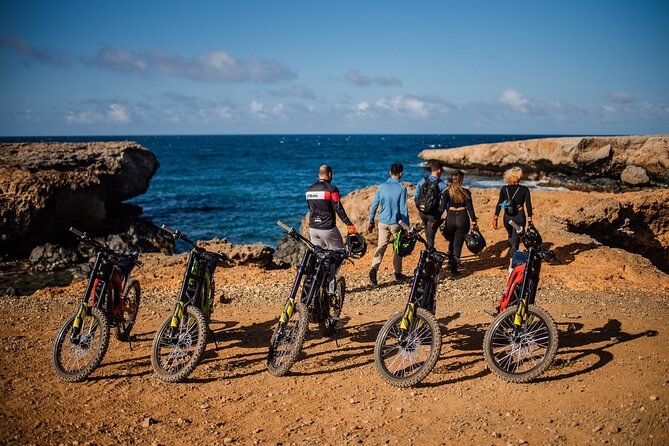
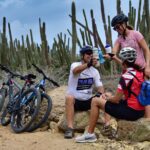
Your day starts at Epic Trail Bikes & Tours in Ayo. Check-in is where you’ll meet the guide, sign the required documents, and get geared up with the helmet. You’ll also do a briefing on safety guidelines and bike operations, which is exactly what you want before you point a fast e-bike at uneven terrain.
There’s also a practice session, and that detail matters more than it sounds. Even if you’re comfortable on two wheels, Surron-style power delivery and off-road handling can feel different from a rental scooter or a road bike. The practice time is the buffer that keeps the rest of the tour from feeling stressful.
A lot of the reviews you’ll read about this tour focus on how the guides keep riders safe and at ease, and the core names that come up are Jonathan and Sandra. Even if you’re a first-timer, that guiding style is what turns an intimidating bike day into a manageable one.
What you should take seriously: you’re required to wear long sleeve shirts and long pants, and you can’t use open-toe shoes. That’s not just for rules—it’s to keep you comfortable and protected on trail dust, scrub, and contact with the ground.
Ayo Rock formations and Tripod Bridge: the north coast ride begins
The tour’s first major scenery hit is at Ayo Rock Formations. You ride there first, then you stop long enough to take in what makes Ayo special: the boulders feel massive and oddly arranged, the kind of rock scene you can spot from afar. It’s also the kind of stop that lets you settle into the day—eyes up, breathing normal, bike legs warmed.
Then you ride onward through hilly and rugged trails toward Tripod Bridge. This part is key because it’s where you start feeling the tour’s rhythm: ride, pause, ride, pause. Those breaks aren’t filler. They give you time for the coastal views and the feeling of being out where larger vehicles don’t go.
Tripod Bridge is also a good measuring stick for your comfort level. If you can handle that stretch, you’re in the right zone for the rest of the day’s mix of trail surfaces and short climbs. If you struggle, the guide should help you adjust—slower pace, clearer hand signals, and tips for dealing with rougher terrain.
One note: this is a bike tour, not a walking tour. The time at each stop is short, so come ready to move. If you want long beach naps, you might find yourself wishing for more hours at just one location.
Blackstone Beach and Andicuri: walks that feel like you escaped the roads

After Tripod Bridge, you get a walk up to Blackstone Beach. You won’t just arrive and take photos; you’ll walk and get a feel for how the beach got its name. The value here is simple: the walking time creates a mental shift from riding to exploring, even though you’re still on a tight schedule.
Next is Andicuri Beach, one of the stops that gives you that Aruba “wait, this is real” feeling. It’s described as secluded and not easily accessible by car. That’s exactly why a Surron e-bike tour is such a good match. You get to the kind of spots that don’t belong to mass tourism routes.
Andicuri also works as a terrain break. After rugged trails, you shift from rock-and-dust riding to something calmer: a sheltered coastline setting where you can stand, look around, and let the day sink in.
Here’s the practical trade-off: these beach stops are brief—about 15 minutes each. You can swim or hang out only if you’re comfortable making the most of short windows. Bring realistic expectations. This is a trail-to-view itinerary, not a full-day beach pass.
Natural Bridge Aruba and the Bushiribana Gold Mill Ruins
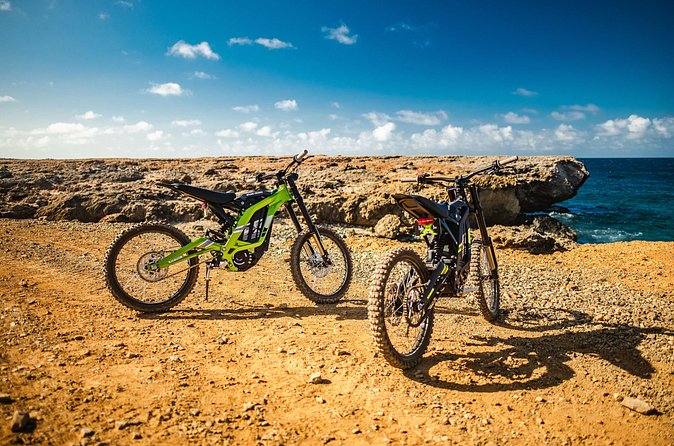
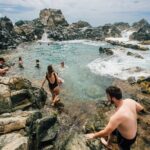
The famous Natural Bridge did collapse in 2005, but the tour still stops at what’s nearby: the Baby Natural Bridge. This is a good example of how this tour handles real-world change without skipping the moment. You still get the dramatic rock structure vibe and the sense of place, even if the main feature isn’t standing the way people remember.
The terrain on the ride in is described as rugged and hilly, so this stop comes after some real trail work. The timing also gives you a natural rhythm: you push through the ride, then you get a payoff that feels worth the effort.
After that, you reach Bushiribana Gold Mill Ruins, where the experience shifts from scenery to story. You ride up along a fairly flat trail leading into the area, then you get a local guide explanation that takes you back to Aruba’s gold rush era. Even without major museum-style interpretation, that guide-led “time travel” effect can turn a pile of ruins into a place with context—why it existed, why it mattered, and how the island’s economy shaped the landscape.
If you’re the type who loves ruins with atmosphere, you’ll probably enjoy this stop more than you expect. If you only want coastline views, you might want to treat this as a short cultural pause and focus on photos and viewpoint angles.
You can also read our reviews of more tours and experiences in Aruba
Wariruri Bay and Alto Vista Chapel: coastal air plus a quiet spiritual stop
The next major scenery pull is Wariruri Bay. You ride with coastal views and get ocean spray from the waves. That detail sounds small, but it’s the kind of sensory cue that makes the North Coast feel close and alive—salt air, wind, and sudden glimpses of water between trail turns.
Wariruri Bay is also one of the secluded beach moments, with the tour description calling it one of the most beautiful and stunning quiet spots on that part of the island. Again, the time is short (around 15 minutes), so plan to do the essentials: a few photos, a look around from a good spot, and a quick cool-down if you’re able.
Then comes Alto Vista Chapel, reached by continuing along the rocky North Coast with trails that lead to a peaceful, harmonious area. At the chapel, you’ll get a historic explanation of the religious building. The practical value of this stop is balance. After beach and ruins, this is a calmer setting where you can slow down and think for a minute.
This is also a good stop for riders who want something besides rocks and coastline. If you’re coming from Aruba’s more commercial areas, a chapel setting can feel like a reset button—less noise, more stillness, and a new angle on what people built and why.
California Lighthouse finale: the ride ends with big views
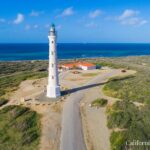
Your last stop is California Lighthouse, and the tour ends there. The schedule gives you time to learn about the lighthouse’s history—how it once served as a vital landmark for Aruba. The key detail from the tour info is the location: the lighthouse sits on top of a rise, which naturally gives it the kind of visibility you’d expect from a working navigational point.
Because this is the end point, it also affects how you plan the rest of your afternoon. If you have dinner reservations, consider timing so you’re not rushing out the door the second you finish. The good news: there’s no need to scramble for transportation. The experience includes free pick-up and drop-off, and if you arrived at the start with your own car, you’ll be transported back to your car at the meeting point.
If you like finishing with a view, this makes sense. A lighthouse stop is the perfect wrap for an off-road ride because it’s elevated and open, giving you one last wide-angle moment after the tighter trail and beach stops.
Who this Aruba Surron tour is best for
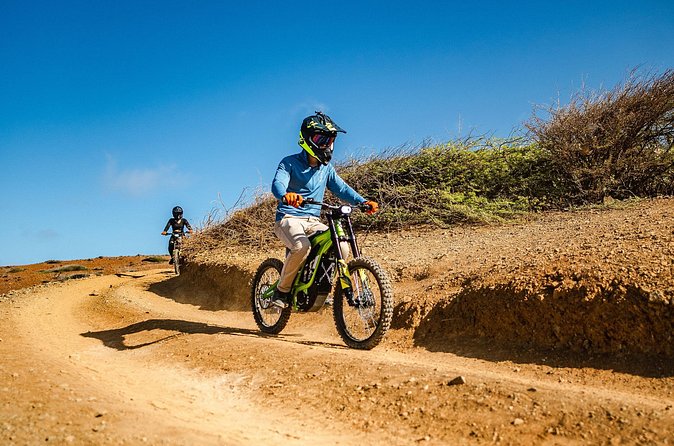
This tour is ideal for riders who want a real off-road feel without being locked into a full-on dirt bike day. You don’t need peak athletic fitness, but you should have moderate physical fitness, since you’ll be on uneven ground and you’ll likely encounter climbs.
It’s also a great match if you want variety. In about half a day, you’ll see rock formations, beach walks, a natural rock structure area, gold mill ruins, a coastal bay with ocean spray, a chapel, and finally the lighthouse. That’s a lot of Aruba in a short time.
If you’re a first-timer: the experience includes a practice session and safety emphasis, and the guide style is described as patient. That’s the kind of support you want if you’re feeling nervous on day one.
If you don’t want a bike tour: you might find the short stop times frustrating. This is built for motion and quick viewpoint breaks, not lingering.
Should you book Epic Off-Road Surron e-bike tour in Aruba?
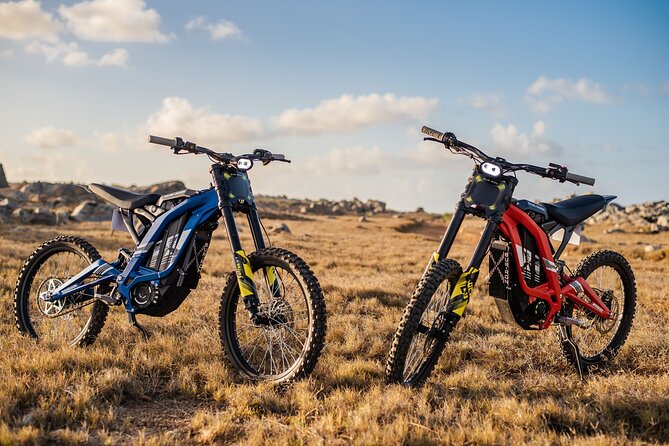
I think you should book this tour if you want Aruba’s North Coast at speed, with real access to trails and secluded beaches. The combination of Surron off-road e-bike riding, a small max-5 group, and a guide who focuses on safety and bike control makes it a strong value for the money.
Skip it if you’re looking for easy, flat, paved sightseeing. You’ll ride rough terrain, follow dress rules, and you need a driver license. Also, since stop times are limited, you should come with a mindset of grabbing photos, taking in the view, and moving on.
If you’re on the fence between UTV and e-bike, this tour gives you something different: you’re on a bike, so you can get onto trails that bigger vehicles can’t reach as easily. That alone is a good reason to choose it when your goal is to feel like you truly traveled off the main roads.
FAQ
How long is the Epic Off-Road Surron e-bike tour?
The tour runs about 3 to 4 hours.
What does it cost?
It’s $160.00 per person.
What’s included in the price?
Included are the Surron off-road electric bike, a certified local guide, bottled water, a helmet, and free pick-up and drop-off.
Do I need a driver license to ride?
Yes. A driver license is required to participate.
What is the minimum age?
The minimum age is 18 years old.
What should I wear?
You’ll need to wear long sleeve shirts and long pants, and only closed-toe shoes are allowed.
How large is the group?
The tour has a maximum of 5 travelers.
Where does the tour start and end?
It starts at Epic Trail Bikes & Tours Ayo, Aruba. The tour ends at the California Lighthouse (with the end meeting point listed near YumYum’s Place in Noord, Aruba). If you drove yourself, you’ll be transported back to your car at the meeting point.
What if the weather is bad, or I need to cancel?
The tour requires good weather. If it’s canceled due to poor weather, you’ll be offered a different date or a full refund. You can also cancel for a full refund up to 24 hours in advance.