REVIEW · ARUBA
Private German Speaking Jeep Tours
Book on Viator →Operated by Aruba Tours to go · Bookable on Viator
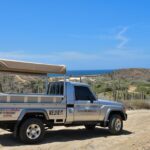
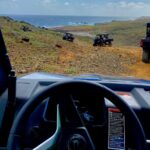
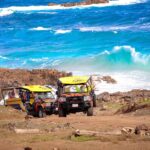
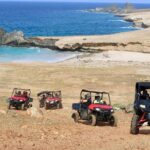
A German jeep ride beats a bus. This private day with German-speaking guide Rensley mixes humor with real Aruba themes like daily life, politics, and nature, so the island feels personal and readable. You’ll also get a pickup option and a tight route designed to hit both geology and beach time without wasting daylight.
Two things I especially like: the way you get 360-degree views from the Casibari Rock area, and the fact that the day ends with real relaxation at Eagle Beach instead of rushing you straight back to town. Between the panoramic stops and the swim-and-sun slot, it’s a trip that balances pictures with breathing room.
One consideration: parts of the route involve walking on uneven rock, and the tour lists moderate physical fitness as a requirement. Also, several stops are short, so you’ll want to be the type of traveler who’s happy with quick, well-paced stops rather than long stays.
In This Review
- Key points worth knowing before you go
- A German-speaking jeep day with Rensley: humor with island context
- Private format for up to 4: why this route feels smoother
- Stop 1 to 3: Casibari views, Ayo petroglyphs, and the Natural Bridge area
- Casibari Rock Formations (about 30 minutes)
- Ayo Rock Formations (about 20 minutes)
- Natural Bridge (about 30 minutes)
- Stop 4 to 5: Quadirikiri caves and Arikok National Park in dry-country mode
- Quadirikiri Caves + Fontein Cave (about 30 minutes)
- Arikok National Park (about 45 minutes)
- Stop 6 to 7: Mangel Halto and Baby Beach for a calmer swim
- Mangel Halto Beach (about 20 minutes)
- Baby Beach (about 30 minutes)
- Stop 8 to 9: San Nicolas murals and the California Lighthouse/Dunes finale before Eagle Beach
- Street murals by Aruba Art Fair (about 20 minutes)
- California Lighthouse and Sasariwichi Dunes (about 10 minutes, admission not included)
- Eagle Beach time: your big swimming and sunbathing slot
- Pickup, duration, and pacing: how to plan your day around the route
- Price and value: what $700 per group really means
- What to pack and how to set expectations for walking and water
- Weather and rescheduling: keeping the plan flexible
- Should you book this Aruba German jeep tour?
- FAQ
- Is this a private tour?
- How many people are in a group?
- What language is the tour guide?
- What time does the tour start and how long is it?
- Is pickup included?
- Are admission tickets included?
- What is the cancellation policy and what if weather is bad?
Key points worth knowing before you go
- Private up to 4 people: This is a group of your size, not a big shared bus day.
- German-led stories from Rensley: You’ll hear history, politics, and social life in an entertaining way.
- Petroglyphs stop at Ayo: A short walk leads to pre-Columbian Arawak rock art.
- Caves with daylit openings: Quadirikiri and Fontein are easy to walk through, with bats in the mix.
- Beach breaks built in: Mangel Halto and Baby Beach come before the finale at Eagle Beach.
A German-speaking jeep day with Rensley: humor with island context
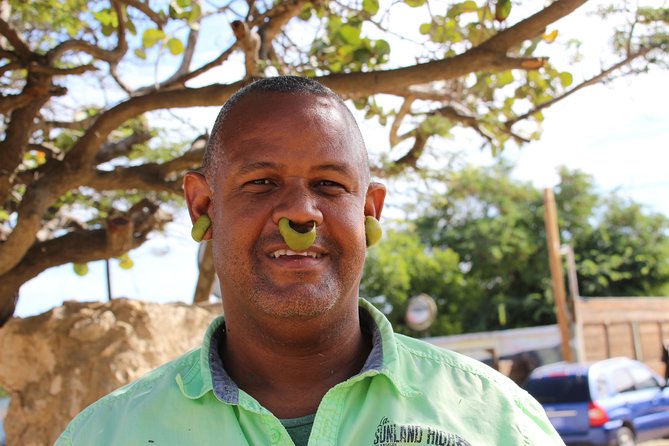
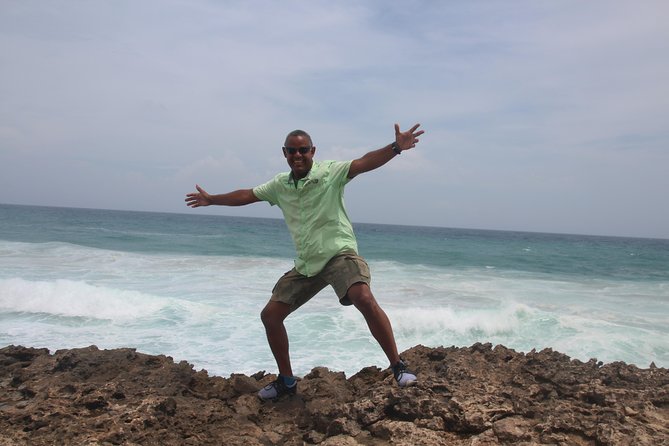
If you want Aruba that feels like a conversation instead of a lecture, this is the kind of tour that fits. Rensley doesn’t just point at sights. He uses stories—often funny—to frame what you’re seeing, from how island society works to how Aruba’s plants and animals survive in a dry climate.
You’ll travel across different sides of the island in one go, which matters because Aruba is small but varied. One hour you’re on rocky plateaus with big views, then you’re dealing with coastal formations, and later you’re in cactus country and mangrove-protected coves.
The private setup keeps it practical. When you’re only riding with up to four people, the guide can respond to your questions instead of rushing everyone through a rigid script. And since the tour is German-language, you won’t be stuck half-following in a second language while trying to enjoy the scenery.
You can also read our reviews of more private tours in Aruba


Private format for up to 4: why this route feels smoother
This is a private tour, limited to your group (up to four people). That one detail changes the vibe. You’re not negotiating for space with strangers, and your timing doesn’t have to match a large group’s pace.
It also helps with the stops. Some are inherently active—rocky climbs, short walks through formations, and a cave visit where you’ll want to move carefully. When everyone in the vehicle is on the same page, you spend less time waiting and more time actually doing the route.
Rensley also seems built for this format. The tour info highlights his humor and his ability to connect many topics—history, politics, social life, and nature—back to what you’re seeing out the window. A private ride is where that kind of guiding style works best.
Stop 1 to 3: Casibari views, Ayo petroglyphs, and the Natural Bridge area
This day begins with strong “wow” geology—exactly the kind of start that sets the tone.
Casibari Rock Formations (about 30 minutes)
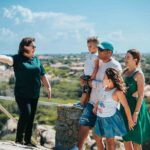
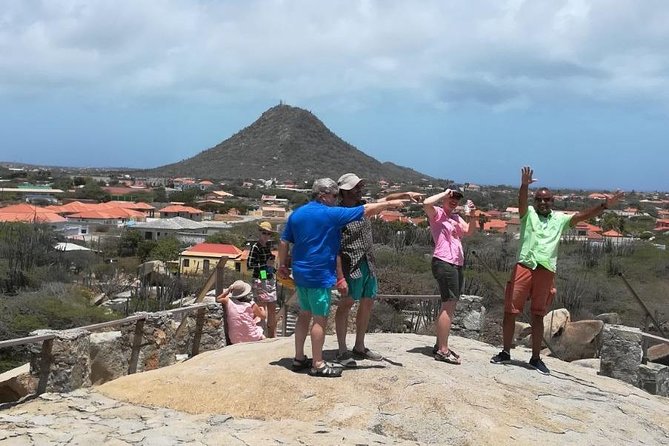
At Casibari, you climb onto the rock formation with the guide. The key payoff here is the high plateau views: a 360-degree panoramic look at Aruba from above. It’s a fast route to orientation. You start to understand how the island is shaped—plateaus, coastlines, and the way certain areas look unexpectedly spread out from the top.
Because the time is about 30 minutes, it’s not a long trek. It’s a short, satisfying climb designed for sightseeing, not training.
Ayo Rock Formations (about 20 minutes)
Then comes Ayo, which works differently than Casibari. Here, instead of standing above everything, you walk through the Giganite rocks and reach a hidden-style spot with pre-Columbian petroglyphs connected to the Arawak people who lived on Aruba.
This is the stop that adds human depth to the rocks. You’re not only learning about terrain; you’re seeing evidence that people lived, marked, and interpreted this land long before modern Aruba.
The short duration is a plus if you’re on a schedule. The guide can keep you moving through the route without turning it into a long hike.


Natural Bridge (about 30 minutes)
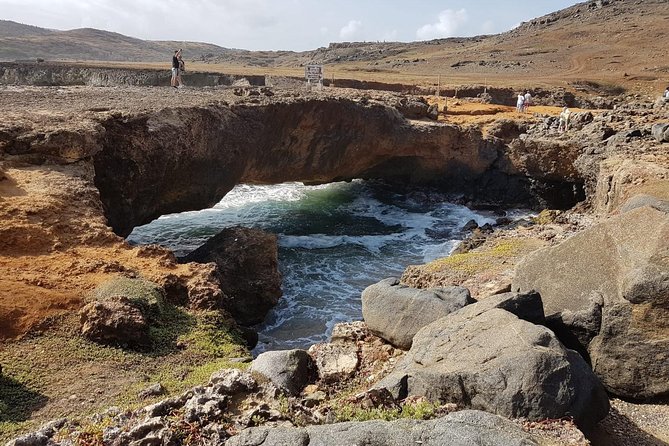
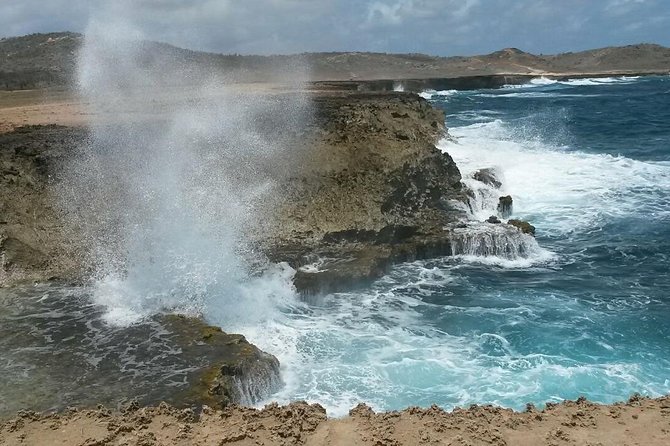
On the rugged north-east coast, you’ll reach what used to be Aruba’s once-largest attraction: the Natural Bridge. The bridge was crashed by wind and waves in the 1990s, so what you see now is more about the aftermath—coastal forces at work—rather than a intact giant rock arch.
Expect a “look closely” stop. The location is memorable because the coastline here is dramatic and the rock features tell a story about erosion.
Stop 4 to 5: Quadirikiri caves and Arikok National Park in dry-country mode
After the north-coast rock stops, the tour pivots into darker, cooler-feeling geology—literally underground—then back into Aruba’s arid character.
Quadirikiri Caves + Fontein Cave (about 30 minutes)
Quadirikiri is described as Aruba’s gigantic two-chamber cave, plus the neighboring Fontein Cave. You’ll be walking through an easy cave area with daylight flowing through a circular opening into the largest chamber.
Bats are part of the experience—so you’ll want your eyes open and your camera ready, but also keep your head where it belongs. This is the type of stop where you follow the guide’s pace and safety sense, especially if the cave floor looks uneven.
The value here is variety. Many Aruba tours focus heavily on beaches. This one gives you a short cave window that changes your senses—light, air, textures—so the day doesn’t feel repetitive.
Arikok National Park (about 45 minutes)
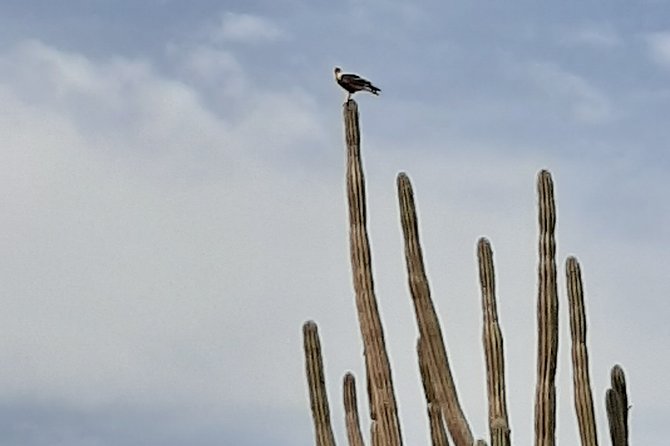
Then you’re in Arikok National Park, where the dry climate shows up clearly. You’ll see giant candelabra cacti, low shrubs, and dry wata-pana trees. It’s also a bird-rich area, with about 120 bird species.
This stop helps connect the dots. Earlier, you saw geology from the outside. Here, you get the survival story: how plants and animals handle Aruba’s dryness. Even if you’re not a hardcore bird spotter, the park framing gives you a better read on why Aruba looks the way it does.
The time is about 45 minutes—long enough to notice plant details, not so long that you’ll feel stuck.
Stop 6 to 7: Mangel Halto and Baby Beach for a calmer swim
Now the tour leans toward water and rest. This is where you’ll notice the route tries to keep beaches from feeling overcrowded.
Mangel Halto Beach (about 20 minutes)
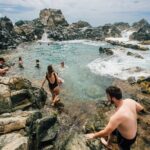
Mangel Halto is described as a vivid turquoise-and-white setting, and it’s not a “loud public beach” kind of stop. The sandy coves are hidden in a protected mangrove thicket, so it feels more tucked in.
Because your time is about 20 minutes, I’d treat this as your first quick swim and photo break. Bring what you need to make it easy, because you won’t have a long stretch to settle in.
Baby Beach (about 30 minutes)
Then comes Baby Beach, described as a hip-high, low-movement water setup—warm, turquoise, and easy to enjoy. It’s the kind of place where you can float, cool off, and basically reset.
A stop like this is valuable because it gives you a softer pace after walking rock and cave areas. Even if you’re not a swimmer, the water profile makes it friendlier for lots of people.
Stop 8 to 9: San Nicolas murals and the California Lighthouse/Dunes finale before Eagle Beach
A good jeep tour doesn’t just throw you at the final beach. It threads in cultural color.
Street murals by Aruba Art Fair (about 20 minutes)
In San Nicolas, you’ll see large-format street murals made by Aruba Art Fair mural artists. The tour treats it as a special art form developed in the ancient capital area, with paintings on older houses.
This stop matters for one reason: it gives you a break from nature-only sightseeing. You get a view of how creativity shows up in everyday spaces.
The time is only about 20 minutes, so it’s best if you like walking around quickly, taking in color, and moving on.
California Lighthouse and Sasariwichi Dunes (about 10 minutes, admission not included)
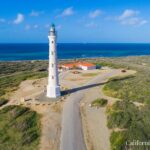
On Aruba’s northern tip, you’ll reach the California Lighthouse area and the Sasariwichi Dunes. You’ll also pass an 18-hole golf course setting nearby, and this is listed as a shorter photo/landmark stop (about 10 minutes).
Because admission here is explicitly not included, you should expect that any ticket-related costs for this portion would be on you if required. For many people, the value is simply seeing the famous lighthouse and dune coastline area, then getting back in time for the main beach.
Eagle Beach time: your big swimming and sunbathing slot

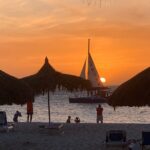
The final beach stop is Eagle Beach, described as a famous 11 km fine sandy stretch where you can swim and sunbathe. Chairs and umbrellas can be rented in many places.
This is where the day’s balance shows up. The earlier stops are active and scenic; Eagle Beach gives you the long-relax payoff. If you’ve been in the sun while climbing rocks, this is the moment you’ll actually feel your shoulders drop.
A practical tip: treat this as your main swim. Earlier water stops are time-limited and more about quick cooling than a full beach session.
Pickup, duration, and pacing: how to plan your day around the route
The tour starts at 9:00 am and runs roughly 6 to 7 hours. That timing is a big deal. A late morning start would compress the scenic stops, but the 9:00 am departure keeps you from finishing the day too late.
Pickup is offered, and that’s especially helpful for a morning start. You don’t have to coordinate your own transport between rocky plateaus, cave areas, and multiple coasts.
Also note: the pacing is stop-by-stop. Several stops are in the 10–30 minute range. That doesn’t mean it’s rushed—it means you’re getting a “greatest hits” route that prioritizes variety. If you prefer long hangs at one place, you might find yourself wishing for extra time. But if you like seeing a lot without full-day dead time, the plan fits.
The tour uses a mobile ticket, and confirmation is received at booking time.
Price and value: what $700 per group really means
The price is $700.00 per group up to four people, with a tour length of about 6 to 7 hours. On the face of it, $700 sounds high. In practice, the math changes because it’s private and capped at four.
Here’s how to think about it:
- If you’re traveling as two, the per-person cost is much lower than a per-person tour price would be.
- As a family or a group of four, this is often one of the more cost-effective ways to get a dedicated guide instead of sharing a vehicle with strangers.
Value also comes from the included “admission ticket free” stops mentioned for multiple sites. That reduces surprise costs across the day, with only the California Lighthouse area specifically noted as not included.
Finally, the guide component matters. Rensley isn’t just driving—he’s telling stories and connecting history, politics, social life, and nature to your route. A private day only feels expensive if the guiding and route don’t justify it. Based on the tour’s consistent guide-centered reputation, the day is designed so you get that justification.
What to pack and how to set expectations for walking and water
The tour lists moderate physical fitness for participants. That means you don’t need to be an athlete, but you should be comfortable with uneven ground and short walks on rocks and through natural areas.
Pack for sun, because you’ll be outside most of the day:
- Sun protection (hat, sunscreen)
- Water for the travel and park segments
- Comfortable footwear with traction for rockier stops
- Swim gear for Mangel Halto, Baby Beach, and Eagle Beach
Bring a plan for a quick beach change at Eagle Beach. You’ll want to go from “photo mode” to “swim mode” efficiently, since your main beach slot is the final payoff.
Service animals are allowed, which helps if you’re traveling with one.
Weather and rescheduling: keeping the plan flexible
The tour requires good weather. If it’s canceled due to poor conditions, you’ll be offered another date or a full refund. Since you’re planning a 9:00 am start, it’s smart to avoid booking this as your only outdoor option on a day when Aruba weather could be unpredictable.
Should you book this Aruba German jeep tour?
Book it if you want a private, German-language day that covers more than just beaches. The route mixes panoramic geology, Arawak petroglyphs, caves, dry-country nature at Arikok, cultural murals in San Nicolas, and then real time at Eagle Beach.
Consider passing or swapping if you dislike short stops and prefer long beach-only days. Also think ahead if you don’t enjoy walking on rocky ground—this isn’t a flat promenade tour.
If your top priority is understanding Aruba through stories and seeing a wide slice of the island in one day, this is a strong fit.
FAQ
Is this a private tour?
Yes. This is a private tour/activity, and only your group participates.
How many people are in a group?
The tour price is per group for up to 4 people.
What language is the tour guide?
The tour is German-speaking.
What time does the tour start and how long is it?
The meeting start time is 9:00 am, and the duration is about 6 to 7 hours.
Is pickup included?
Pickup is offered.
Are admission tickets included?
Many stops list admission ticket free, but the California Lighthouse and Sasariwichi Dunes stop notes that admission is not included.
What is the cancellation policy and what if weather is bad?
You can cancel for a full refund up to 24 hours in advance. If the tour is canceled due to poor weather, you’ll be offered a different date or a full refund.