REVIEW · ARUBA
Private Windsurfing Lessons in Aruba
Book on Viator →Operated by Aruba Active Vacations · Bookable on Viator
Aruba’s trade winds make this lesson feel real fast. This private windsurfing session is built around short, hands-on practice so you’re not stuck watching for an hour before you touch the sail. I like that the instructors start on the beach with a clear setup lesson—wind, sail, boom, mast, and board—then move quickly into doing it. You’ll also get a chance to practice under supervision before you take your own runs.
My favorite part is the way the structure supports beginners: you start small, then you keep combining steps until steering makes sense. After you rinse off, you still have useful extras like a freshwater shower, plus Wi-Fi and beach chairs. One thing to consider: the teaching area can get crowded later in the day, so if you’re new, an earlier time slot usually feels smoother.
In This Review
- Key Highlights You’ll Care About
- Aruba Trade Winds: Why This Lesson Works
- Price and Time: Is $90 Worth It?
- Private vs Shared: What the 1–2 Person Format Changes
- Where You Meet at Aruba Active Vacations (Rooi Santo 28)
- Gear and Safety: Watershoes, Life Jackets, and What’s Actually Provided
- The First Hour on the Beach: Learn the Sail Before You Sail
- The Second Hour: Practice Solo With a Coach Watching
- Amenities on Site: Shower, Wi-Fi, Chairs, and Hammocks
- Timing Matters: Avoid the Crowds for a Smoother Learning Curve
- Instructors and Teaching Style: What to Expect in Real Life
- What You’ll Learn (So You Know When You’re Improving)
- Who This Lesson Suits Best (And Who Might Want a Different Plan)
- Quick Tips That Make Your Lesson Better
- Should You Book This Private Windsurfing Lesson in Aruba?
- FAQ
- How long is the private windsurfing lesson?
- How many people is the lesson for?
- What does the lesson cost?
- Where do we meet?
- Is pickup available?
- What gear is included?
- Is there an on-site shower and other amenities?
- Do I need to be very athletic?
- What happens if weather is poor?
- Can I cancel for a full refund?
Key Highlights You’ll Care About
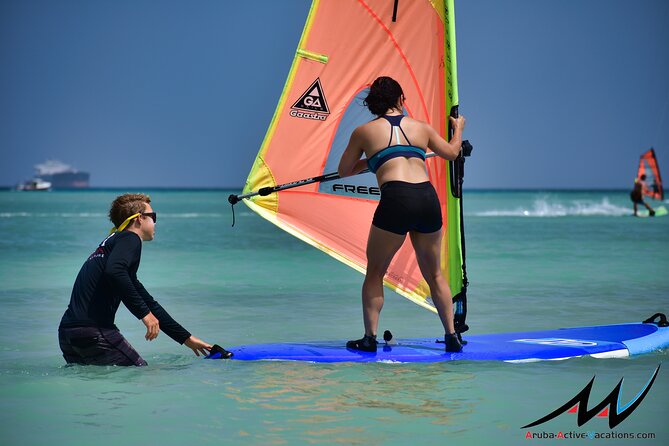
- Private coaching for 1–2 people means less waiting and more actual wind time
- Two hours total, with the second hour focused on solo practice under supervision
- Gear provided, including watershoes (life jackets on request, not recommended)
- Beach briefing first, so you understand how to hold the sail, place feet/hands, and tack/turn
- On-site comfort perks like freshwater shower, Wi-Fi, beach chairs, and hammocks
- Optional pickup has an extra fee ($5), and you’ll still start at the main meeting point
Aruba Trade Winds: Why This Lesson Works
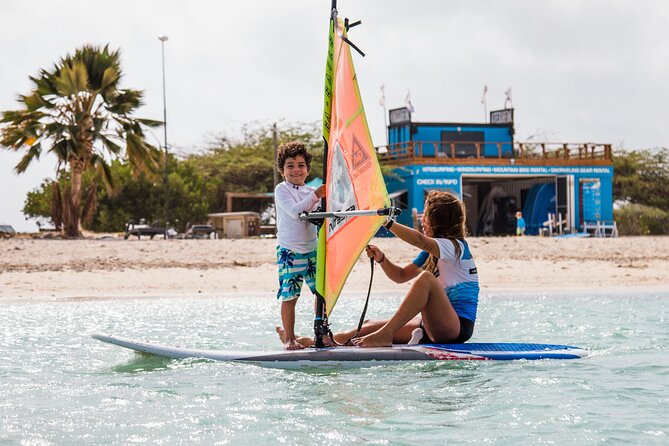
Windsurfing sounds like one skill you either have or you don’t. On Aruba’s coast, it becomes more like learning to read the wind and trust your gear. Aruba has consistent trade winds, and that matters because you’re not stuck waiting for the “perfect” gust. Instead, you get enough wind to feel how the sail changes your direction and speed without the lesson turning into a full-day guess-and-pray.
This lesson is interesting because it treats windsurfing like a sequence. You’re not handed a board and told good luck. You start with the basics you actually need—how the sail rig behaves, what the boom and mast do, and what your body must do to control the board. Then you practice those pieces right away, so the wind becomes part of your learning, not a distraction.
And because it’s private for one or two people, the instructor can adjust the pace to you. That’s a big value when you’re a true beginner, especially if you’re learning how to fall without panicking and how to reset fast.
You can also read our reviews of more private tours in Aruba



Price and Time: Is $90 Worth It?
At $90 per person for about two hours, the price makes sense if you compare it to the cost of repeating lessons. One of the toughest parts of wind sports is that you can’t learn the balance and sail control in theory. You need wind time. This lesson buys you that wind time and adds a coach watching your body position while you practice.
The structure helps justify the cost:
- the first part builds your fundamentals quickly
- the second part lets you work independently while still having a safety net
If you’re traveling with a partner and want to learn together, private lessons can be a smart deal compared to splitting your attention between multiple people. Just remember the session is short. You’ll get the basics, not a mastery certificate.
Private vs Shared: What the 1–2 Person Format Changes
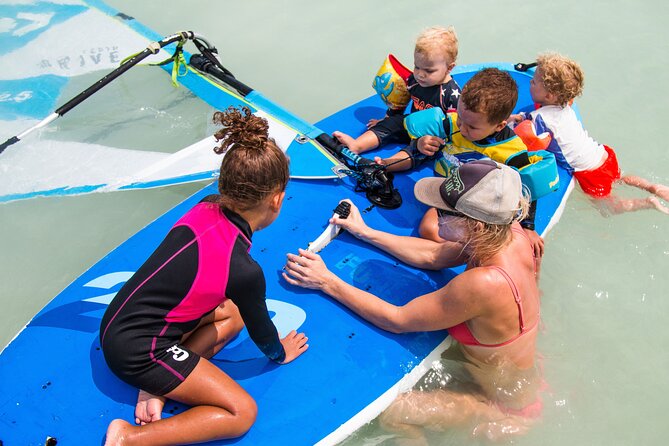
Here’s the practical advantage: your instructor can stay focused on you. In a busy, shared setting, you often end up standing around while someone else gets corrected. In this private format, you practice more continuously, and feedback is timed to what you’re doing right then.
The lesson is explicitly for 1 or 2 people max, so couples can learn at the same time. That’s a nice advantage if one of you is more cautious and wants extra reassurance while the other is eager to progress.
There’s also a psychological benefit. Wind sports are intimidating the first time—until someone teaches you how to handle the sail without feeling like you’re wrestling a sailboat monster. The instructors in this setup have a track record of being friendly and patient, and you’ll feel that energy right away.
Where You Meet at Aruba Active Vacations (Rooi Santo 28)
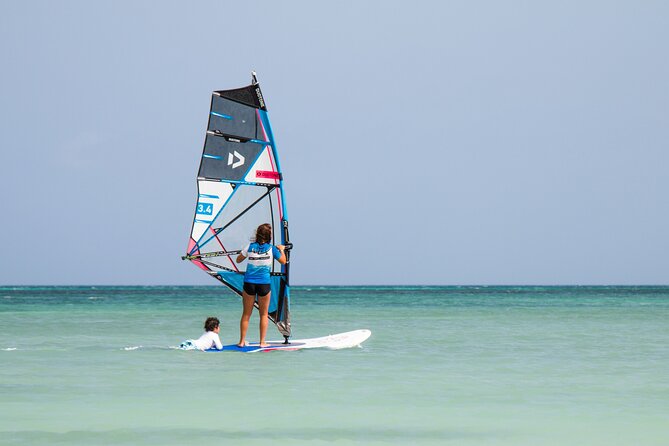
You’ll start at Aruba Active Vacations, Rooi Santo 28, Office Noord, at the Fishermans Huts beach area in Noord. The activity ends back at the meeting point. It’s also listed as being near public transportation, which is helpful if you’re not using pickup.
When you arrive, expect a quick routine before you get on the water:
- take off flipflops and anything heavy or warm
- complete paperwork
- store your luggage in lockers
- get watershoes and a life jacket if you need one
There’s an important detail here: the lesson day flow is meant to be fast. If you show up late, you’ll feel it immediately because windsurfing depends on timing, and you only have about two hours.
If you’re sensitive to equipment issues, add a buffer. One past lesson noted that watershoes were disorganized and took some searching before finding a fit. I recommend arriving early enough to try your shoe size calmly.
Gear and Safety: Watershoes, Life Jackets, and What’s Actually Provided
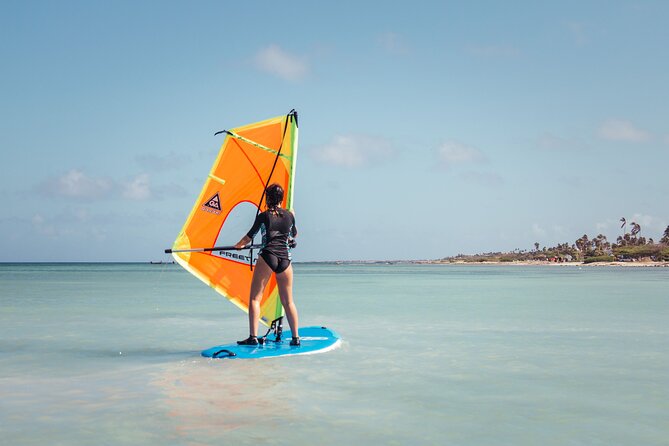
The equipment is included—windsurfing gear plus watershoes. Life jackets are available on request, and they’re listed as not recommended. That might sound confusing, but it’s common in beginner windsurfing: instructors often prefer you learn the board position and sail control without extra bulk, while they teach safe handling and how to dismount.
That said, if you feel safer with a jacket, ask for it. The key is communication early, before you’re out in the wind.
Also note what you do and don’t get:
- You do get watershoes, rinse amenities, and beach setup.
- You do not get any mention of on-site bathrooms, and one description calls out an outdoor shower rather than restroom facilities.
So bring whatever you need for your comfort before you arrive, like sunscreen and a plan for what you’ll wear after.
You can also read our reviews of more tours and experiences in Aruba


The First Hour on the Beach: Learn the Sail Before You Sail
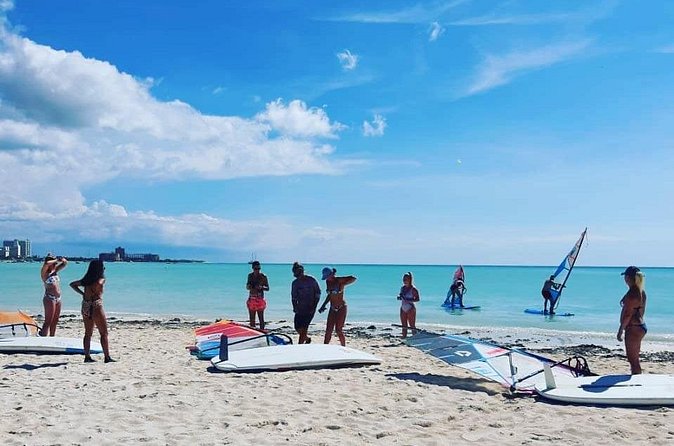
The lesson starts with a short explanation and demonstration on the beach. This is where you build the mental picture that keeps you from feeling lost once you’re on the water. You’ll learn the parts of the system—the wind, the sail, the boom, the mast, and how the board responds.
Then you get small practice cycles. The instructor teaches while you practice at the same time, which keeps momentum. These beginner drills focus on the building blocks:
- how to hold your sail correctly
- how to place your feet and hands
- basic turning and setup (the lesson description mentions learning to tag)
You also get a key “aha” moment: the wind lets you feel how steering and direction work. That’s valuable because windsurfing is one of those sports where your body learns faster than your brain. When you start to notice how tiny sail adjustments change your angle, the whole sport clicks.
From a comfort standpoint, this pacing matters. Short practice segments reduce the time you spend frustrated. It also limits how long you’ll be getting tossed around before you understand what to do next.
The Second Hour: Practice Solo With a Coach Watching
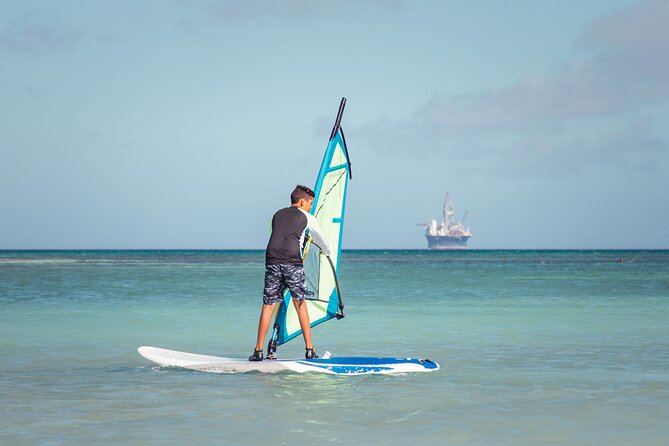
By the time the second hour begins, you’re not just repeating drills for training purposes. You practice on your own under supervision. If you need help, the instructor is there, but the goal is independence.
This is where beginners often improve faster. Once you have a small skill—like getting positioned—you can repeat it and build confidence without waiting for the coach to guide every moment.
It also helps that the instructor stays close enough to correct when something goes wrong. That matters because windsurfing mistakes often come from one misstep: foot placement, sail grip, or timing your turn. With supervision, you can fix those issues quickly instead of absorbing the wrong habit.
One past lesson described the value of extra support without making the experience feel intimidating. Another pointed out that pace can vary depending on instructor style, so if you want more hands-on coaching, say so early. Ask questions before the second hour starts so you know how you’ll be supported during solo practice.
Amenities on Site: Shower, Wi-Fi, Chairs, and Hammocks
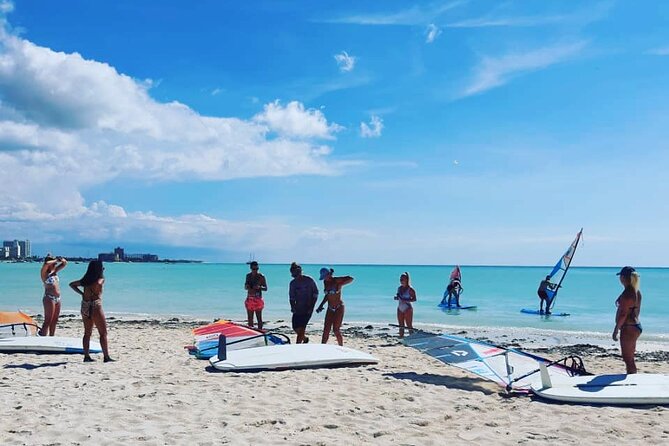
This is one of those small travel wins that you appreciate more after you’re done: you get a fresh water shower, plus Wi-Fi and beach chairs with hammocks. That’s not just convenience. It helps you transition from sweaty, salty, windblown to “I can go eat lunch like a normal person.”
A practical note: the outdoor shower is mentioned, and there’s no focus on bathrooms. So plan for that. If you need changing space, you may want to come ready to ride and rinse without expecting indoor facilities.
The Wi-Fi matters too if you’re checking messages or trying to coordinate plans after class. And the chairs/hammocks make the waiting part less painful—because even with good pacing, you’ll still spend some time off the board.
Timing Matters: Avoid the Crowds for a Smoother Learning Curve
The most repeated practical lesson here is timing. As the day goes on, the area can get crowded, and that affects beginners. Crowds can mean more hustle on the beach, more pressure while you’re setting up, and less calm water to practice confidently.
One description recommends an early morning lesson, when the beach and water feel like you have more space. I agree with that logic. If your goal is to learn with minimal stress, you want conditions that let you reset without feeling watched or rushed.
If you can choose, pick an earlier slot. If you can’t, arrive a little early so you can handle gear setup calmly.
Instructors and Teaching Style: What to Expect in Real Life
Instructors here vary by day, but the pattern is friendly, patient coaching. Examples from past experiences include:
- Ramon, praised as patient and funny
- Louis and Alfredo, described as supportive with clear explanations
- Rudolf/Rudolph, described as kind and making wipeouts feel less scary
- A mention of Shamar with feedback that was negative for that particular lesson
So here’s my advice: treat the first minutes as your chance to set the tone. Ask what you should focus on first—sail control, stance, turning, or getting back to the start safely. If you feel you need more guidance, say it early and clearly.
Also pay attention to equipment fit. One past note mentioned watershoes being hard to locate and fit. If something feels wrong with your gear, flag it immediately. Small fixes in fit and grip can prevent bigger problems once you’re out there.
What You’ll Learn (So You Know When You’re Improving)
You should leave with more than a memory of the wind. You’ll learn how to:
- hold the sail correctly
- place feet and hands in a safer, more stable setup
- practice basic turns and sail adjustments (the lesson mentions steering via wind feel)
- combine the steps gradually until you’re actually moving
In other words, the lesson aims at getting you up and going, not just floating around. If you’re brand new, you may still wipe out. That’s normal. What matters is that the instruction helps you understand what went wrong and how to adjust next time.
And since the lesson is private, corrections can be targeted to what you’re doing. That’s why the “short practices” approach works better than one long lecture.
Who This Lesson Suits Best (And Who Might Want a Different Plan)
This experience is built for people with moderate physical fitness. You should be comfortable with physical effort like getting on the board, balancing, and recovering after wipeouts. If you have limitations that affect balance, getting up quickly, or wearing wetsport gear comfortably, you might want to consider a different activity or ask the operator what their beginner support looks like.
This lesson is a great fit for:
- true beginners who want direct coaching
- couples who want to learn at the same time
- travelers who like hands-on training more than sightseeing
- people who want a short, efficient activity that still feels like a real sport
It may feel less ideal if you need a very calm, low-movement experience. Wind and waves come with the territory.
Quick Tips That Make Your Lesson Better
Here are a few practical things that help you get more out of your two hours:
- Bring strong sunscreen or a sun shirt. One lesson note said sunscreen alone wasn’t enough.
- Wear your swim gear plan before you arrive so you’re not rushing.
- Arrive early enough to find a comfortable watershoe fit.
- If you’re getting picked up, confirm details in advance so there’s no last-minute confusion.
- Choose an earlier slot if you can, to reduce crowd pressure.
If you want to learn efficiently, treat the first hour as the foundation. The second hour is where you’ll feel progress fast if you keep repeating the same setup.
Should You Book This Private Windsurfing Lesson in Aruba?
I’d book it if you want the most efficient way to learn windsurfing basics in Aruba. The private 1–2 person format, the two-hour structure, and the step-by-step beach coaching are built for beginners who want to move quickly from explanation to actual sail control.
Skip it—or consider another option—if you hate physical activity, expect the water to be quiet at any time of day, or need heavy bathroom facilities on site. Also, if you’re relying on pickup, double-check the plan early so you’re not stressed before your session.
If your goal is to leave with real windsurfing skills and not just photos, this is a strong choice.
FAQ
How long is the private windsurfing lesson?
It runs for about 2 hours.
How many people is the lesson for?
It’s a private tour for 1 or 2 people maximum.
What does the lesson cost?
The price is $90.00 per person.
Where do we meet?
You meet at Aruba Active Vacations, Rooi Santo 28 (Office Noord, Fishermans Huts beach, Noord, Aruba).
Is pickup available?
Pickup is listed as available, but hotel pickup/drop-off has an additional fee of $5.
What gear is included?
You get windsurfing equipment and watershoes. Life jackets are available on request and are listed as not recommended.
Is there an on-site shower and other amenities?
Yes. There’s a fresh water shower, plus Wi-Fi, beach chairs, and hammocks.
Do I need to be very athletic?
The experience recommends moderate physical fitness.
What happens if weather is poor?
The activity requires good weather. If it’s canceled due to weather, you’ll be offered a different date or a full refund.
Can I cancel for a full refund?
Yes. You can cancel up to 24 hours in advance for a full refund; cancellations less than 24 hours before the start time are not refunded.