REVIEW · ARUBA
Electric Scooter Island Tour in Aruba (1 or 2-seater)
Book on Viator →Operated by Scootey Aruba · Bookable on Viator
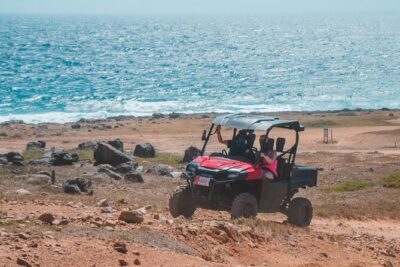
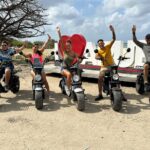
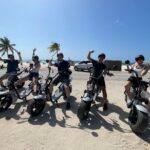
A few hours on a scooter can turn Aruba into a moving postcard. You’ll glide past white-sand beaches and classic viewpoints, with a guide keeping the pace and traffic stress low. I like that the tour starts with a real safety briefing (helmet included), and I like how you get a lot of scenery in a single loop. One thing to keep in mind: each stop is short, so it’s more about seeing than lingering.
This is a great fit if you want variety—quiet wetlands, lively beachfront strips, and those big Caribbean photo views—without renting a car or dealing with parking. The tour also runs with a small cap (up to 20 people), so it feels more like a group outing than a cattle-call.
And if you’re expecting Alto Vista Chapel and winery from the broader description, do a quick check when you book. One schedule hiccup showed that timing can mean those stops aren’t always guaranteed, even when they appear in tour summaries.
In This Review
- Key highlights at a glance
- Starting in Noord: the scooter lesson that sets the tone
- Eagle Beach first: turquoise views and quick photo time
- Bubali Bird Sanctuary: a calm nature pause behind the hotels
- Rolling past Palm Beach Boulevard: Aruba’s modern side on the move
- Malmok Beach: clear shallow water and snorkeling-friendly vibes
- Arashi Beach: a quieter local-feeling finish before the lighthouse
- California Lighthouse: the big panoramic closer
- Choosing 1- or 2-seaters: who this tour works for
- Price and value: what $89 buys you in Aruba time
- What to pack and when to go: the small things that matter
- The guide factor: why names keep showing up
- Should you book the Electric Scooter Island Tour in Aruba?
Key highlights at a glance
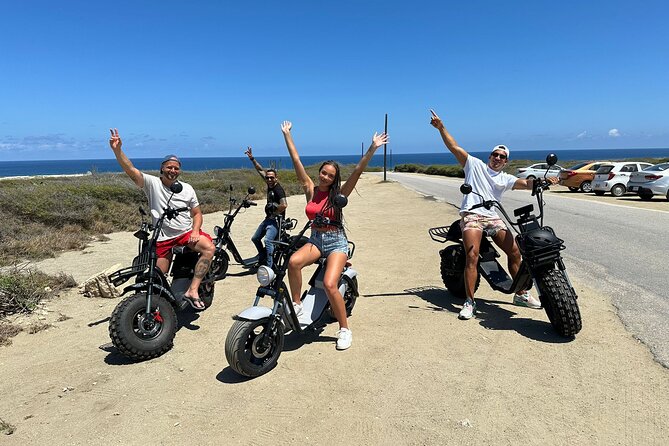
- Safety briefing before you ride so you’re not winging it on two wheels
- Eagle Beach, Malmok Beach, and Arashi Beach in one smooth coastal route
- Bubali bird sanctuary stop for a break from pure beach scenery
- California Lighthouse viewpoint to wrap up with wide open coastal views
- Small group size (max 20) with guides helping you through intersections
- Helmet and bottled water included so you can travel light
Starting in Noord: the scooter lesson that sets the tone
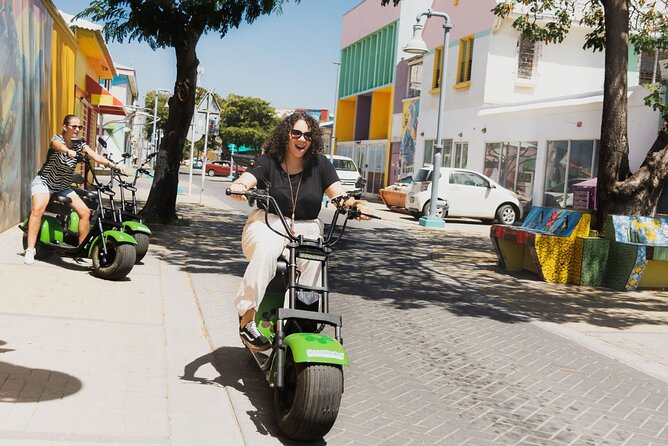
The whole experience runs from Tanki Flip in Noord, and you’ll get going with a short orientation first. Before anyone starts riding for real, you’ll do a safety briefing and scooter orientation, plus you’re issued a helmet and bottled water. That matters more than people think, because Aruba roads can be busy around resort areas.
In the real-world reviews I’m basing this on, the guides consistently push two things: confidence and control. If it’s your first time on an electric scooter, the early instruction helps you get your bearings fast—how to mount, how to brake, and how to stay smooth at low speeds. You’ll also be guided on where you’re going, and the group stays together instead of turning into a free-for-all.
Pickup is offered, which is a big deal if you’re staying in hotels scattered around the area. Just know the activity itself ends back at the meeting point.
You can also read our reviews of more tours and experiences in Aruba
Eagle Beach first: turquoise views and quick photo time
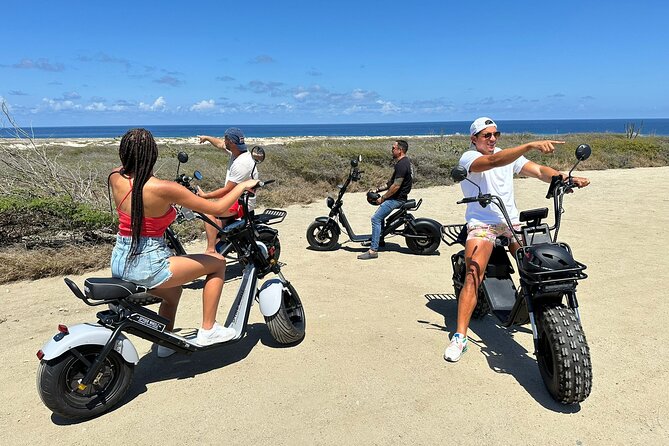
After orientation, the ride heads west toward Eagle Beach, one of Aruba’s best-known stretches of sand and water. The tour gives you about 20 minutes here, which is short, but it’s a smart way to keep energy up and time moving. Think: photos, a little walking, maybe a dip if conditions are right.
What I like about doing Eagle Beach early is that you’re arriving before the day gets fully loud and crowded. You also get that immediate Aruba “this is why I came” moment—white sand, bright water, and the coastline lined with palm trees.
If you want more beach time than the itinerary allows, use Eagle as your “get the look” stop, then plan your own longer beach afternoon separately.
Bubali Bird Sanctuary: a calm nature pause behind the hotels
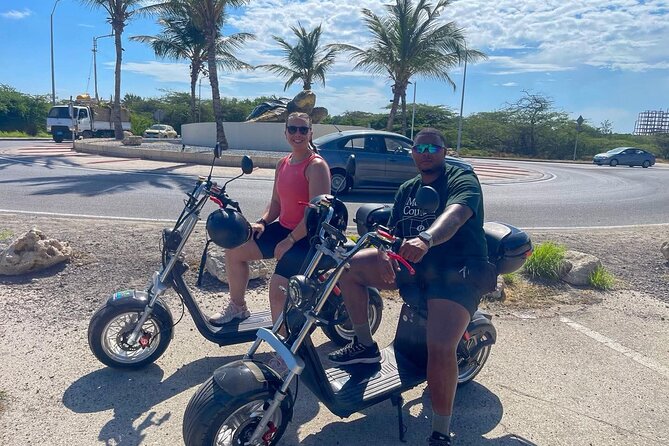
Next up is the Bubali Bird Sanctuary area at Bubali Plas—described as a natural lagoon and bird sanctuary just behind the hotel zones. This stop is also around 20 minutes, but it plays a different role than the beaches.
Instead of salt air and sun, you’re looking at wetlands and local wildlife in a quieter setting. It’s a nice mental reset. Even if you’re not a dedicated birdwatcher, the wetlands feel like a reminder that Aruba isn’t only about the postcard coast.
Expect this to be more of a look-and-breathe stop than an activity stop. The best move is to walk slowly at your own pace, take in the scenery, and enjoy the change of texture compared to the beaches.
Rolling past Palm Beach Boulevard: Aruba’s modern side on the move
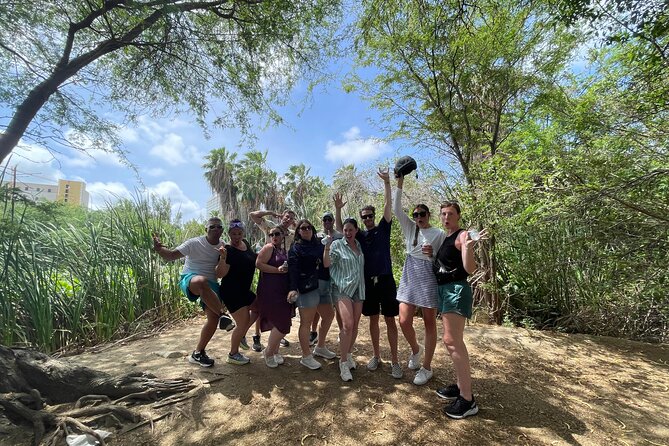
From Bubali, you continue riding through the area near Palm Beach Boulevard, with the tour framing this as a look at Aruba’s modern, resort-and-strip side. You’re not expected to do a full shopping break here; the time is built around riding and spotting what’s around you.
This section is valuable because it adds contrast. You see where people stay, where restaurants and boutiques cluster, and how the island balances natural beauty with high-comfort visitor life. It’s also useful for orientation—once you’ve ridden these roads, it’s easier to understand where the beaches and services are located if you plan the rest of your trip independently.
Malmok Beach: clear shallow water and snorkeling-friendly vibes
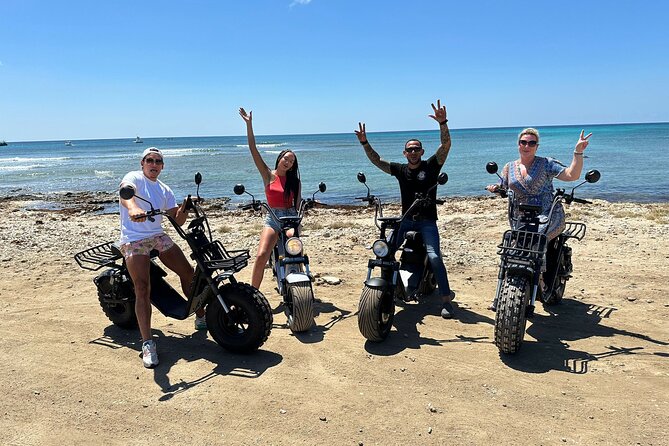
Then comes Malmok Beach, another coastal stop designed for a short stretch of time—again, about 20 minutes. Malmok is known for clear shallow waters and snorkeling spots, so even if you don’t bring snorkeling gear, you’ll likely be able to see why people come here.
The quick stop format works well at Malmok because you can do the essential things: snap photos, stand close to the waterline, and soak up the view without burning your whole tour on one beach.
If you do want water time, plan it around what your body and comfort allow. The tour’s goal is movement and variety, not a full beach session.




Arashi Beach: a quieter local-feeling finish before the lighthouse
After Malmok, the route heads to Arashi Beach, described as calmer and more of a local favorite. You’ll get another short photo-and-relax stop. Arashi’s atmosphere tends to feel less like a mega-postcard and more like a “slow down and hang here” kind of beach, which pairs nicely after a couple of more famous coasts.
This is where you can adjust your expectations: if Eagle is the big wow, Arashi is the “ok, I get it” beach. You can do a little walking, take in the water color, and enjoy a more relaxed rhythm before the final viewpoint stop.
California Lighthouse: the big panoramic closer
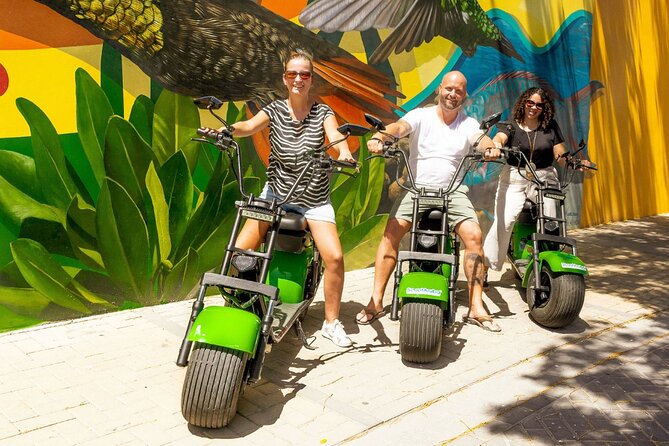
The last stop is the California Lighthouse, a signature Aruba landmark with panoramic views of the coastline. You’ll spend about 20 minutes here, which is enough time for group photos and a slow scan of the shoreline.
Why this makes a strong ending: the lighthouse viewpoint gives you a sense of scale. You can see how the beaches and coastal curves connect, and it helps the earlier stops feel like one continuous story instead of separate stops.
If you’re riding in the afternoon, this is also a great moment to capture photos while the sky and light are still flattering.
Choosing 1- or 2-seaters: who this tour works for
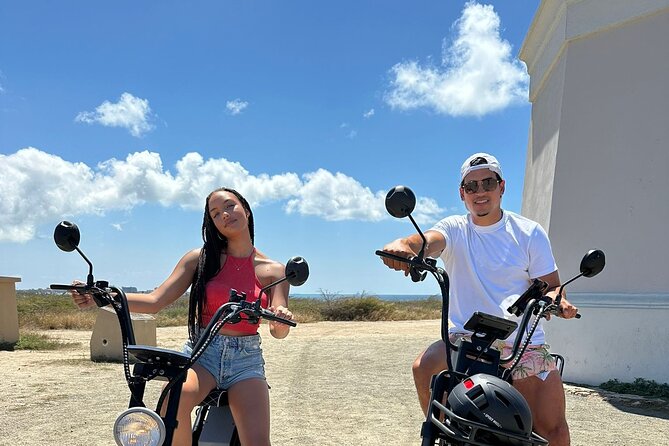
This tour is offered in 1- or 2-seater versions, so you can match your comfort and group size. If you’re traveling as a couple or friends, a 2-seater can be a fun way to keep the experience together. If you’re solo, the 1-seater option keeps it simple.
The key requirement is comfort on two wheels. The tour notes that you need to feel comfortable riding a scooter or similar two-wheel bike. From what’s emphasized in the way guides run the training, you don’t need to be a stunt rider—but you do need to be willing to practice a bit and follow instructions.
This is a solid choice for:
- Couples who want a shared adventure without renting a car
- Solo travelers who want structure plus variety
- People who like guided stops but don’t want to sit in a bus for hours
It’s less ideal if you’re hoping for a full beach day at each location or if your comfort level on scooters is low.
Price and value: what $89 buys you in Aruba time
At $89 per person for about 3 hours, the value comes from how much you actually see versus how much effort it takes. You’re not just paying for a ride—you’re paying for:
- A guided route through multiple major coastal zones
- Helmet and bottled water included
- A safety briefing that helps you get comfortable quickly
- Pickup offered (depending on your situation)
- A tour format that keeps you from driving yourself between scattered beach areas
Compared with doing the island by car, you avoid parking headaches and the mental load of route planning. Compared with a bus tour, you get more freedom in the “stop and look” moments, even though each stop is timed.
Also, the small group cap (max 20) helps the experience feel more personal. That’s a quiet quality-of-life factor that shows up when you’re navigating intersections.
What to pack and when to go: the small things that matter
This tour is weather-dependent and designed for good conditions. If the island is having a rough weather day, the experience may be canceled and you’ll be offered another date or a full refund.
You’ll also want to pack for sun and movement, because the tour does not provide sun protection. Plan on:
- Sun protection (sunscreen, hat, sunglasses)
- Comfortable clothes you can move in
- Something light for warm weather
The tour includes helmet and bottled water, so you can travel lighter than you would for a self-guided day. Still, bring what you personally need for heat and salt air.
Timing-wise, the stop structure means you’ll see a lot but won’t do long lounging at any one beach. If you want to maximize your day, do this tour as your “orientation and highlights” activity—then follow it with an unhurried beach afternoon of your own.
The guide factor: why names keep showing up
One theme in the experience is how much the guides influence the vibe. Names that come up often include Ed, Gi, Gino, Pito, Bo, Eldrick, and Coco. You’re likely to get an owner-linked or deeply invested guide team, and the consistent pattern is patience during training and clear guidance once you’re on the road.
That matters because scooter riding is mostly about staying calm and following cues. When guides help you through intersections and keep the group together, you get to spend your attention on Aruba, not on worrying.
You should also know this isn’t presented as a rigid script. If something doesn’t go perfectly, guides tend to adjust and keep the ride fun and moving.
Should you book the Electric Scooter Island Tour in Aruba?
Book it if you want a high-value highlights loop: multiple beach scenes, a nature pause, and a lighthouse viewpoint, all in roughly three hours. It’s especially worth it if you don’t want to rent a car, hate parking, or want a fun, structured way to see Aruba’s variety.
Skip it or reconsider if you’re chasing long stays at beaches, or if scooter riding on two wheels feels stressful. Also, if Alto Vista Chapel and winery are must-dos for you, ask about the exact route for your date, since timing can change what gets included.
If you’re on the fence, my advice is simple: treat this as your Aruba “best of” starter pack, then build the rest of your trip around the beach or town time you want most.